
I realized the other day that in our 4+ years of raising chickens, I have never actually researched and chosen specific breeds of chickens for our flock. Mostly this is because we have almost always been given free chickens over the years, and when they are free, you don’t really get to choose.
I have only bought chicks once, and I basically just got whatever the feed store had that particular day. Back then, I had no idea about chicken breed temperments or egg laying capabilities or anything. The chicks were cute balls of fluff and I didn’t care what they were.
But things are quite a bit different now. I’ve learned a lot more, and we are finally ready to branch out into selling eggs and possibly even breeding our own chickens and eventually raising them for meat (once we’re no longer so focused on building a house, of course). And so even though we have more chickens than we have ever had before (17), we decided it was time to get more! (In case you’ve never been told, chickens are addictive and are a “gateway livestock” animal, or so says this YouTube video I saw years ago. She’s right! 😊)
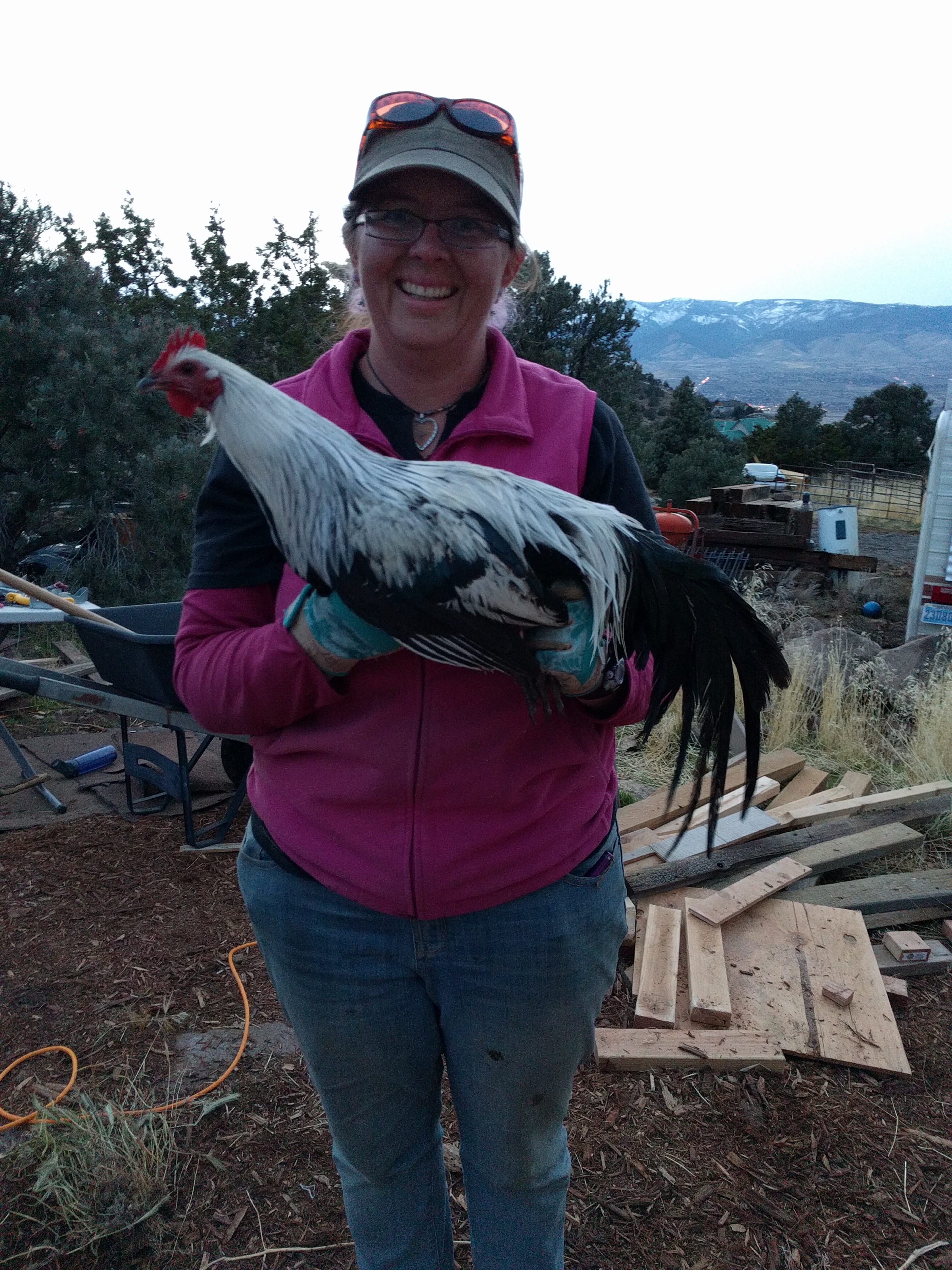
Of course, this decision was helped by the fact that two of our hens are broody at the moment. We don’t want them to hatch any of our eggs because we don’t want our Silver Phoenix rooster’s genetics. So they are sitting on golf balls. When the time is right, I will get some day-old chicks from the local feed store(s) and that night will switch out the golf balls with chicks and the hens will think the “eggs” hatched and will raise the chicks as her own.
So the question becomes, “Which breeds should I get?”
I’ve been doing a lot of research and here’s what I’ve come up with.
First of all, when deciding which breeds you want, you need to know what it is you want out of the hens.
For us, it’s primarily eggs. Therefore, any breed that lays less than 200 eggs a year on average are not even being considered.
Also, we like dual purpose breeds. While we don’t have a plan to raise the birds for meat yet we like knowing that our birds will have enough meat on them to make a decent meal if it comes to that. We’re trying to make it our practice here on the homestead that everything serves more than one purpose if possible.
We also like the idea of the heritage breeds, especially the older, established ones. That connection to history is cool. And also, if it’s a true breed and not a hybrid, then when we want to start breeding our own, we can.
They have to be cold hardy. This winter was fairly mild in temps but we can dip down to negative numbers (Fahrenheit) for a few weeks at a time, and I want to make sure our girls can weather the weather just fine. We have a bunch of Leghorns and Leghorn crosses right now, and their large combs did not like even the mild winter we had.
And last but certainly not least, I have to like the breed. There’s gotta be something extra about them to make me consider them. Thus why Rhode Island Reds did not make my list. When I read all over the place that they are an extremely popular bird and “everyone” has them, it immediately makes me not want them. Besides, I think they are kinda boring looking. 🙂
So here’s my list of chickens breeds that I think will be the best ones for us.

Ameraucana hen (image source)
Ameraucana – I have heard varying reports on the number of eggs they lay, but most websites say it is over 200. They are cold hardy, not prone to broodiness, are interesting to look at, and of course, they lay the coolest eggs ever! We have one hen now who has some Ameraucana or Araucana blood in her and I love her blue-green eggs! So while they may not be the most prolific layers, the Ameraucana made it to my list because they are just so darn cool!
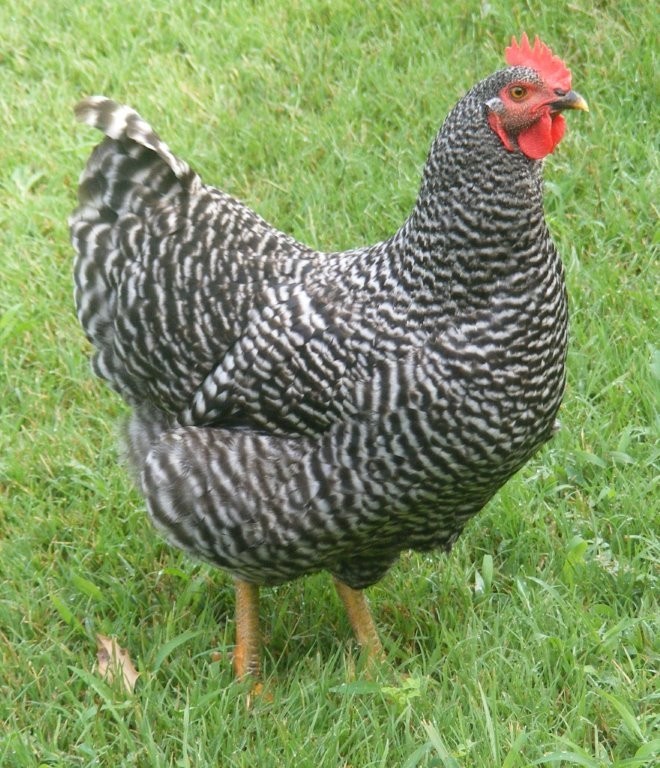
Barred Rock hen (image source)
Barred Rock – the Plymouth Barred Rock is an American dual purpose breed that is cold hardy and lays a ton of eggs (up to 300 in ideal conditions!). It is also a beautiful bird. ‘Nuff said.
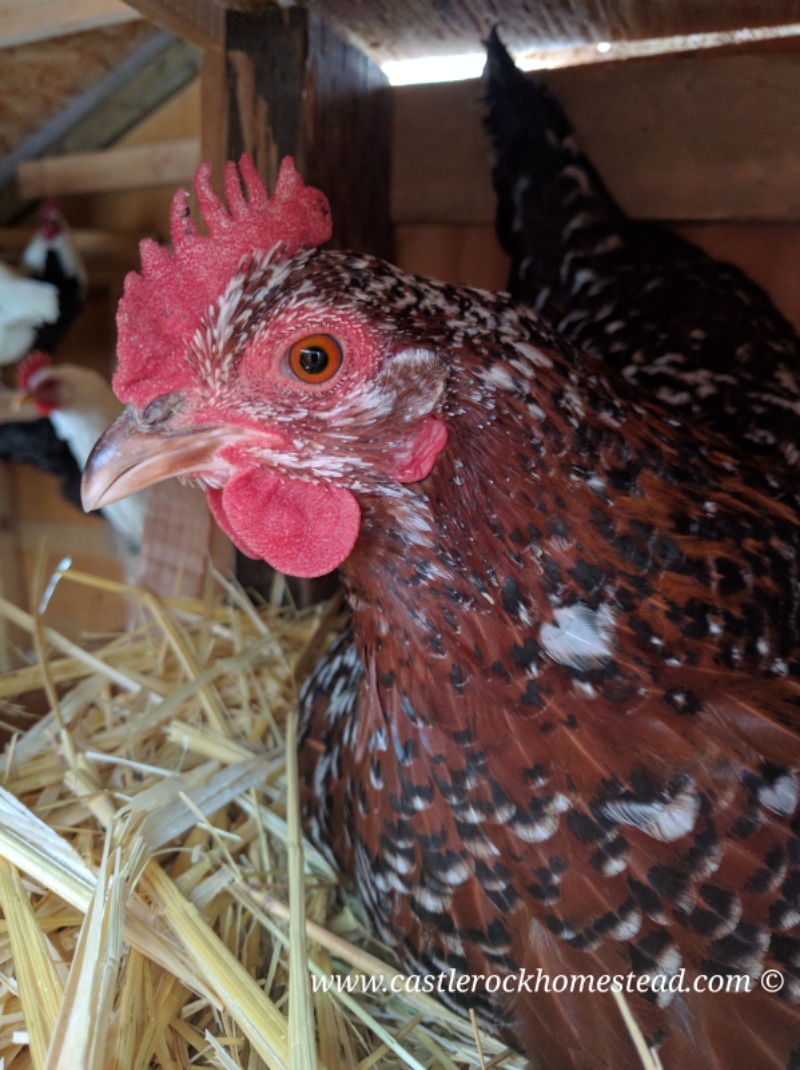
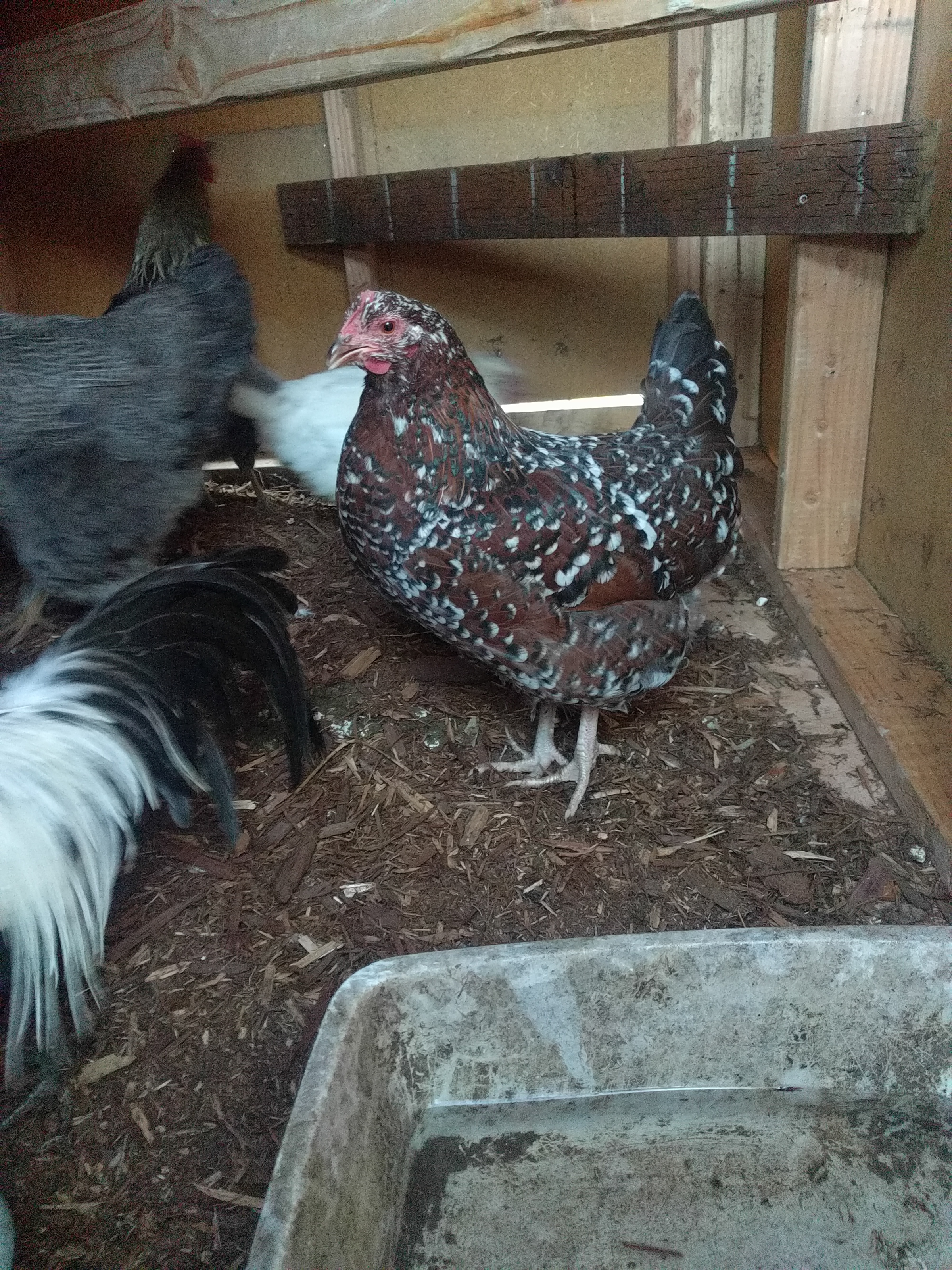
Speckled Sussex hen
Speckled Sussex – see Barred Rock description (Only they are from England) 😁
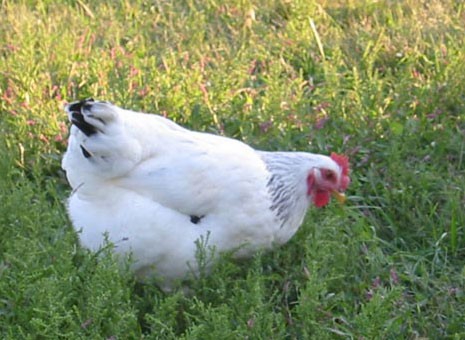
Delaware hen (image source)
Delaware – they are good layers (200-250), an American dual purpose breed, cold hardy, and beautiful.
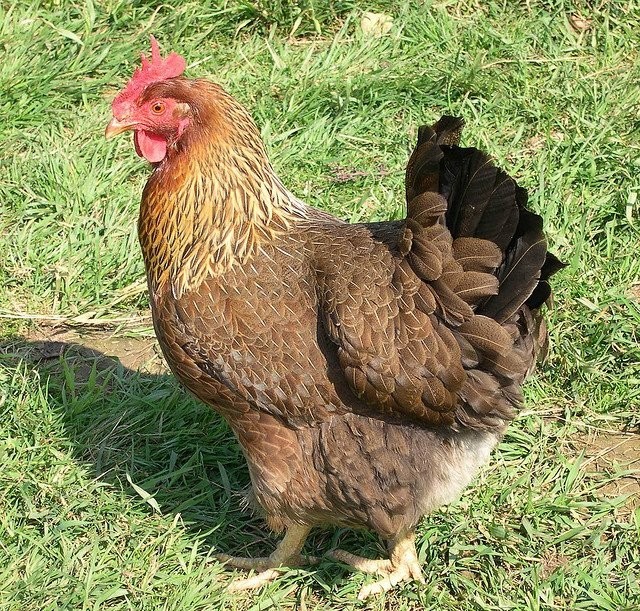
Welsummer hen (image source)
Welsummer – again, a breed I want specifically for the egg color as they lay dark brown eggs. Not quite as dark as the Copper Marans lays, but the Welsummer is cold hardy, where the Marans are not. And the Welsummer is still a decent layer at 200+ eggs per year. They also have the added benefits of being a dual purpose breed that rarely goes broody.
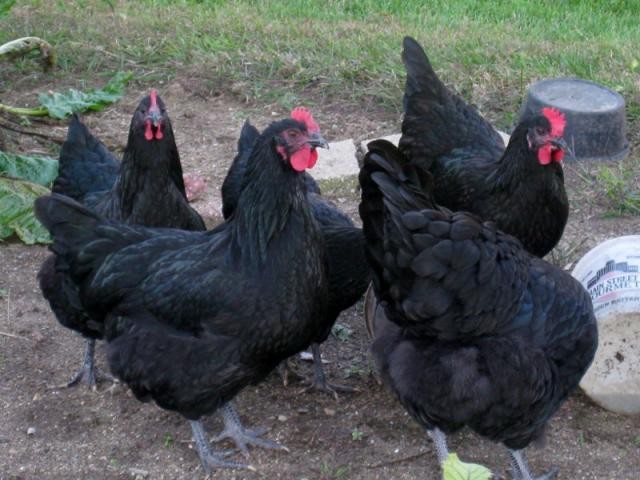
Australorp hens (image source)
Australorp – these “Australian Orpington” chickens are almost last on my list because there’s not a whole lot to recommend them to me other than the fact that they meet nearly all the requirements. They lay 250+ eggs a year, are cold hardy, and a dual purpose heritage breed. But there’s nothing there that makes them “pop” for me. But if that’s all the store had, I’d take ’em! (Heck, if all I could find were Rhodes Island Reds, I’d take them, too, I guess. 😁)
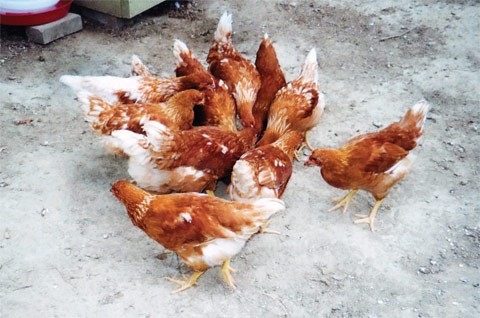
Sexlink hens (image source)
Sexlink – so, if you’re a long time follower of ours, you might remember that in the fall of 2014, just a few months into our Portland Interlude, we were given 6 chicks. Three ended up being roosters and went bye-bye (some with larger consequenses than others). One of the remaining hens was killed by a neighborhood cat (we think). The other two matured into egg laying machines! Those two hens were the offspring of one of two roosters and any number of hens in a mixed flock. But the savy farmer who wanted more egg laying machines would try to figure out which rooster and hen combo produced these two hens. And then reproduce it. And hey, if you could tell at hatching which chicks were boys and which were girls, all the better, right? That right there is what a Sexlink chicken is. Roosters and hens of different breeds are selectively bred together to get an egg laying machine of a hen. And the cool thing about it is that the chicks are colored in such a way that there is a 100% accuracy rate in telling the boys and the girls apart. And that’s what makes the Sexlink hybrids at least somewhat appealing to me. You know you‘re getting hens. No surprises. (Most hatcheries have a 90% accuracy rate at sexing the non-sexlink chicks correctly) But, they are not a heritage breed, meaning if you hatch one of their eggs, the chick will not necessarily have any of the good characteristics you are looking for. But the high volume of eggs, and the fact that you know what gender you’re getting means that I won’t discount them outright.
So that’s our plans. We’re looking to get about a dozen chicks for ourselves and about 4 for my parents. I’ll let you know which breeds we actually end up with when we get them.
Do you have chickens? What breeds do you have? Which are your favorites?
Maridy






 Castle Rock Homestead