Tag Archives: Homemaking

Preparing

Today was such a beautiful day out, I just had to forgo the boxes inside in favor of some outdoor work. Did a bit of straightening and cleaning and weeding.

And Flower Girl and I added a bit of curb appeal to the front yard.

image

image

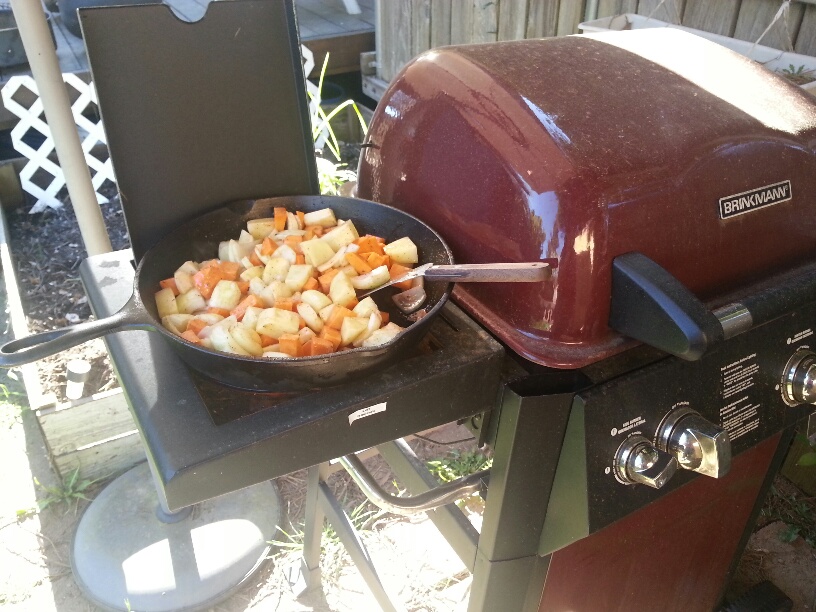
And for dinner, I decided to start getting in the practice of cooking outside, since that will be our life soon. I fired up the side burner on our gas grill for the first time.

image

These skillet potatoes and onions will go great with the smoked chicken Hubby is cooking in the smoker. Mmmmm…. the smell of dinner cooking in the great outdoors. What is it about cooking outside that makes everything taste better? 🙂

Anyway, we’re busy preparing for our move (which will hopefully happen in May). Whether it be physically preparing by packing and cleaning house, or mentally preparing by figuring out how we’re going to cook our favorite foods while boondocking on the homestead, we’re preparing to start our great adventure!

And what an adventure it’s going to be!

Maridy

“I lift up my eyes to the hills, where does my help come from? My help comes from the Lord, the maker of heaven and earth.” Psalm 121

Daily Life #14 – Candles

February 8th

I made candles!

Yes, I have made candles in the past. The waaaaaaay past. Like, I was a kid and it was a school project.

And as I mentioned last week, I wanted to try making candles from scratch, including the wicks. So today’s project was to finish the wicks, and get the candles made so that I can do the burn test tomorrow.

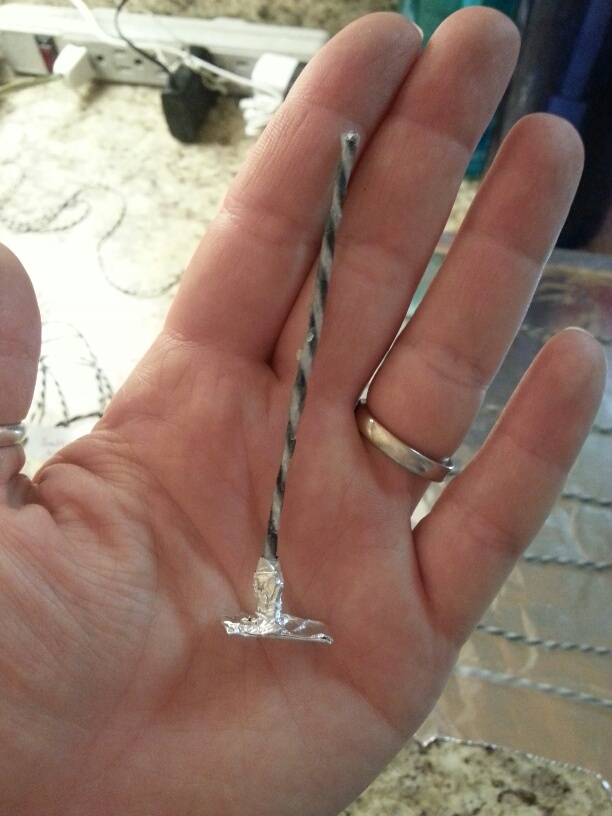
Over the last week or two, I’ve been soaking and drying string in several different solutions. Today I dipped them in wax, let them dry, cut them to size, made little feet for them out of aluminum foil (worked with mixed results), put them in labeled jars, and poured in the hot wax.

image

Waxing the wicks

image

Homemade wick with homemade stand

A couple of these little feet fell off the string when they came in contact with the hot wax being poured into the jar. I have and idea of how to fix it next time.

image

Homemade candles - I used the aluminum foil to hold the wicks in the middle of the candle.

It’s a good thing to put down some sort of protection on the counter, because candle making is messy!

I’m excited to see how they do tomorrow. When I get the results of the burn tests I will post a full report.

As for today, we enjoyed some rare sunshine and warm weather. So nice to get outside and soak up some vitamin D.

image

Maridy

“I lift up my eyes to the hills, where does my help come from? My help comes from the Lord, the maker of heaven and earth.” Psalm 121

Daily Life #4 – DIY Mason Jar Spout And Carpet Deodorizer Recipe

So I’ve seen this tip on Pinterest several times and today the planets aligned and I was able to make one for myself.

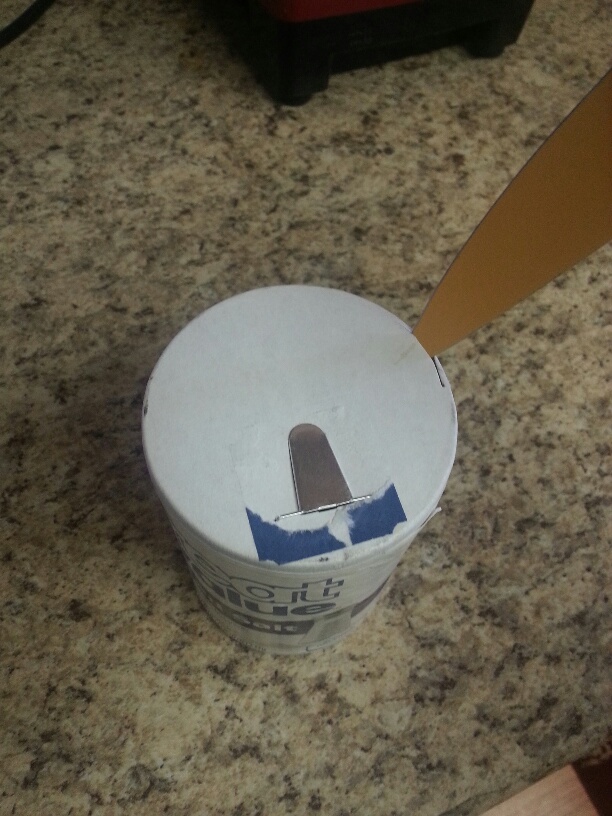
20160129_125920_resized

And by planets aligning, I simply mean that I happened to have the need for one right when I had a nearly empty salt container.

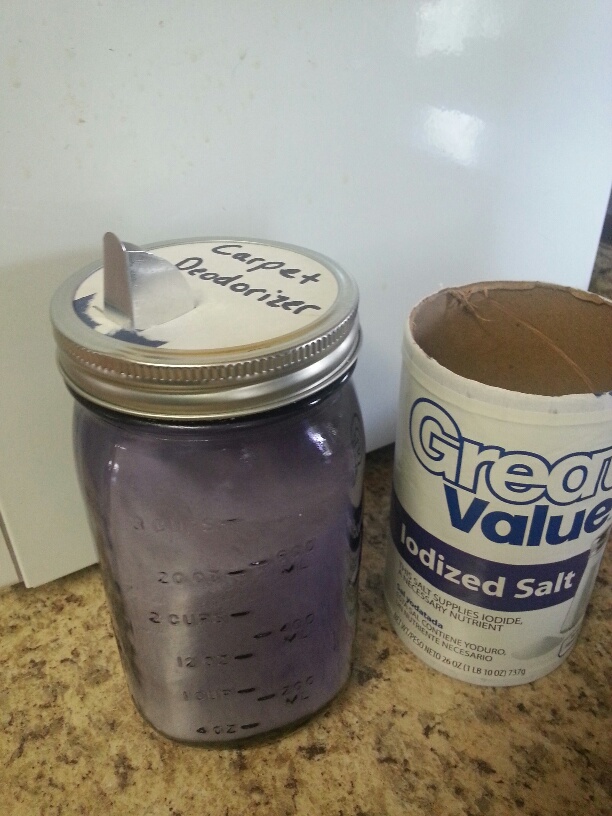
I finally got around to vacuuming today and wanted to use my homemade carpet deodorizer (recipe below). But I tend to accidentally shake half the powder on the carpet when I try to shake it out without some sort of top on the jar. I thought about punching holes in a jar lid, but then I remembered this tip.

All I did was use a sharp knife to cut the top off the salt container, then put it on the jar in place in the lid. It worked remarkably well! It is the perfect size for a wide mouth jar. In order to use a regular mouth jar, just trace around a regular size lid and cut it down accordingly.

20160129_125741_resized

So, the carpet deodorizer recipe. That also is super easy.
-Fill a quart size mason jar about 3/4 full with Washing Soda (not baking soda)
-Add 10-20 drops of your favorite essential oils (we like orange and clove or lavender and eucalyptus), put the lid on, and shake the jar to distribute the oils.
-Shake the deodorizer on your carpet 15-30 minutes prior to vacuuming (test on obscure area 1st).
-Vacuum as normal.

Notes:

-Do not use baking soda, it is too powdery and tends to leave a white residue, thus why the recipe calls for washing soda. It still absorbs the odors of stinky carpets but is more granular. It can be found in the laundry isle of most grocery stores.

-You can fill your mason jar full, but then you’d want to dump the soda into a bowl, add the oils, mix, and return to the jar. Otherwise the jar will be too full to shake to distribute the oils. I prefer to just do it as stated above so I don’t have another dish to wash.

-I find that I use about 1/4 of the jar (roughly 1 cup of the mixture) per application. Depending on the size of your house you may have to use more or less. This is where the salt container spout comes in handy as I found that without it, too much sprinkles out and I invariably ended up using over half my mix for one round!

-I use this powder every other or every third time I vacuum, depending on how stinky the pets and kids have been. 🙂

I really like that this carpet deodorizer is all natural. No weird chemicals to worry about around my family.

So aside from vacuuming my house (finally!), and in between the daily tasks of taking care of the family, I started researching how to make candles from scratch. An article I read recently got my gears turning and Hubs and I got to talking about all those skills which we have a theoretical knowledge of, but have never actually tried. Like candle making. Did you know that you are supposed to treat wicks with something like boric acid in order to make them burn properly? I had no idea, and my minimalist side is wondering if it really  makes a difference. So my plan is to try a couple different types of wicks and see what the results are.

So in a couple days hopefully I’ll have a post all about making candles. 🙂

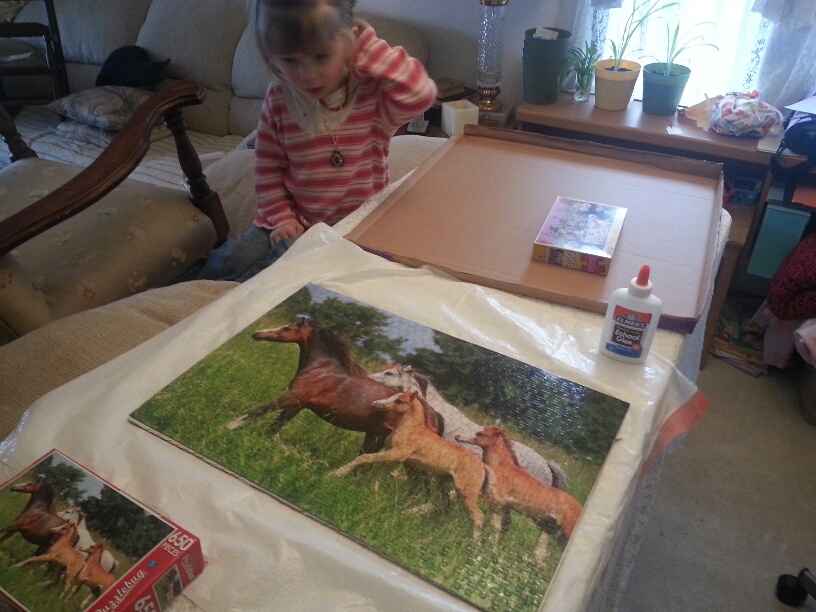
Princess Girl and I also got around to mounting the puzzle we finished a couple weeks ago.

20160129_135640_resized

I cut a piece of cardboard the same size as the puzzle, we covered it in Elmers glue, then slid the puzzle onto it and slathered a bit more glue on the top. Then, when it had dried a bit, we covered it in plastic and put a box on top to keep it from bowing. Princess Girl is going to hang it in her room when it is finished.

And that’s how this homesteader spent her day.

Maridy

“I lift up my eyes to the hills, where does my help come from? My help comes from the Lord, the maker of heaven and earth.” Psalm 121

Bacon Lard

I’m nearly out of bacon lard and need to make some more, so I figured it was a opportune time to write a tutorial on just how I do that.

Just a word about using lard: if you are vegetarian or subscribe to the low-fat-everything-is-healthy-for-you way of eating, then this is not a post for you. If you’d like to learn more about the philosophy I believe when it comes to using saturated fats for our family’s diet, read this article, it sums up my beliefs quite well.

Now, I’ll be the first to say that the lard which comes from processed bacon is not the healthiest fat on the planet. But I use it because 1.) saturated fats are not the evil fats they have been made out to be, and 2.) (most importantly) it’s free! As with almost everything in this world, moderation is key. I suppose it would be more healthy if we used healthier bacon (yes, there is such a thing.) But we haven’t made that switch yet. One of these days…

So, what is bacon lard anyway, and how do you make it?

I’m so glad you asked. ‘Cause I’m gonna tell you. 🙂

Whenever you make bacon, there’s all that grease left over, right? I know some people dump that grease into a grease pot and leave it on the counter and use it just like that. But, my modern food handling mind just can’t get past that. And I know people who simply pour their bacon grease in a container and keep it in the fridge and use it as needed. I don’t like that either because then you have all those little burned bits of bacon fond mixed in with the grease and an overpowering bacon flavor. I know, I know, there are those of you asking, “What’s wrong with that???”(My Hubby is included in your ranks, for sure!) But depending on what I’m using it for, I don’t want it to taste so much like bacon. And those little burned bits just make the grease look “dirty”. Turning your bacon grease into bacon “lard” makes it nice and clean and less bacony in flavor. It is a long, but very simple process. Most of the time you’re not doing anything but waiting for the grease to harden.

Ok, you you’ve just made your bacon and you want to clean the pan. What do you do with the grease? Well, you simply pour it into a container and put it in the fridge.

But wait! Didn’t I just say I don’t like doing that? No, I said I don’t like using that grease as-is. I do something extra with the grease to make it more like lard.

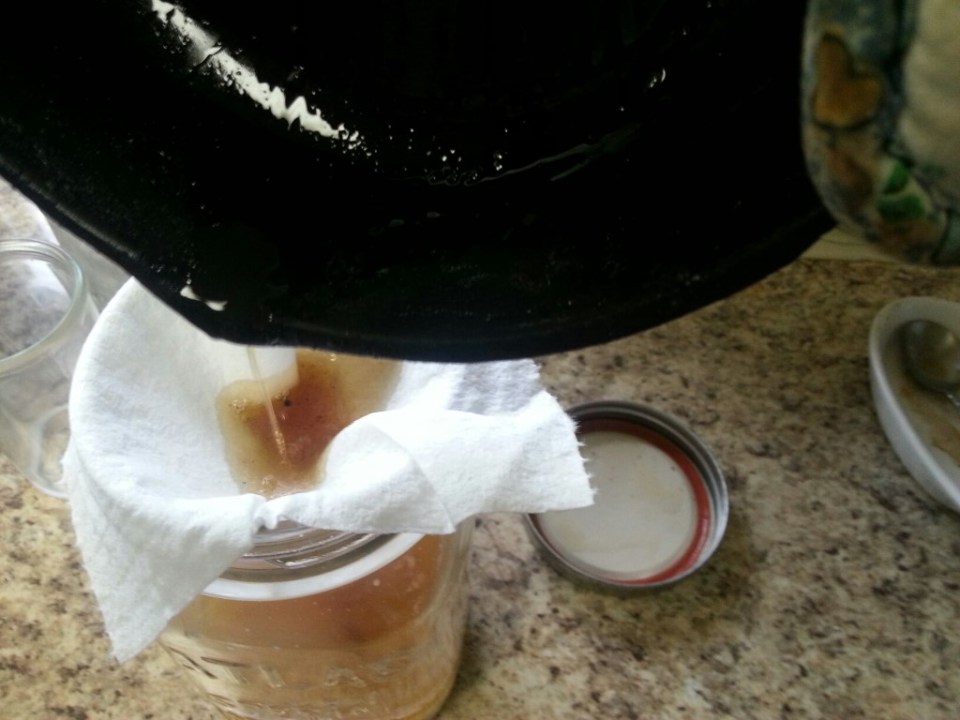
First of all, I like to strain my grease through a paper towel as I put it in the jar.
20151007_105634_resized

This step is not totally necessary, but makes the cleaning process go faster.

Cleaning process? You “clean” your lard?

Yep. Yep I do.

20151007_105726_resized

Anyway, once your container is full (or nearly so – this make take a while depending on how often you eat bacon), simply melt your grease…

20151113_105316_resized

Yes, that’s bacon grease – with all the dirty bits still inside.

…I use the microwave.

Then you add the grease and about the same amount of water into a pot and put it on the stove to boil.

20151113_110332_resized

Once it just starts to boil, turn it off and set it aside. You can put in some cold water to help it cool off faster. As I’m sure you know, oil and water do not mix. The lard (oil) will float to the top of the water, and the impurities which were in the grease (the dirty bits) will sink or be washed out by the water.

The next step is where the length comes in. You have to let this oil and water concoction cool enough that the fat will solidify. If the temps are cold enough outside, I often secure the lid on the pot, and put it outside in the cold. This makes the process go faster. However, if the temps outside are too high, I let it cool to room temperature, then stick it in the fridge, usually overnight.

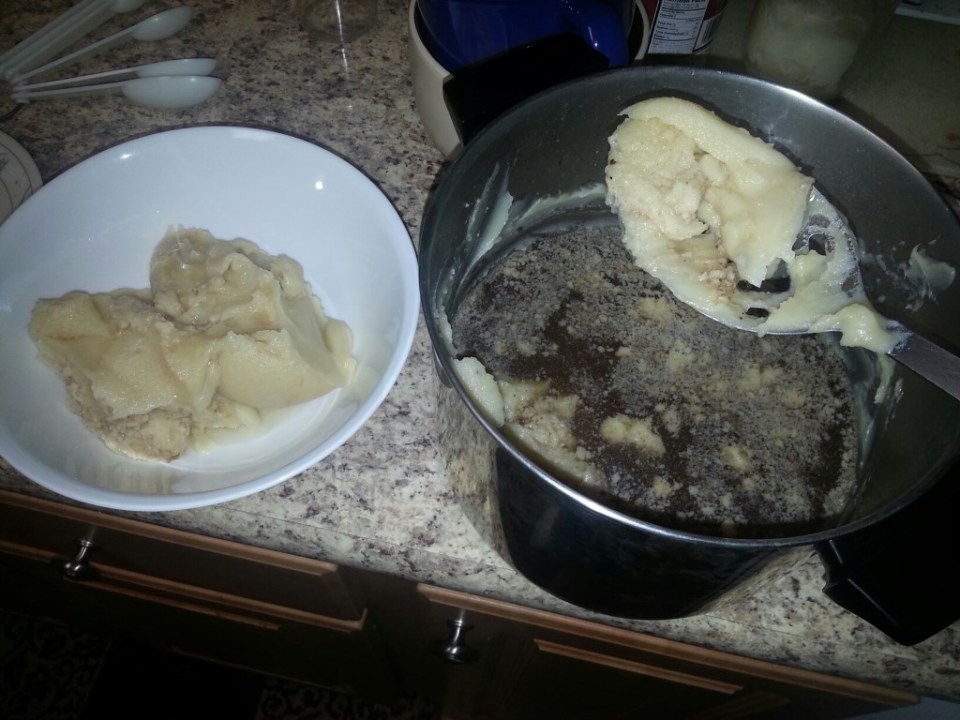
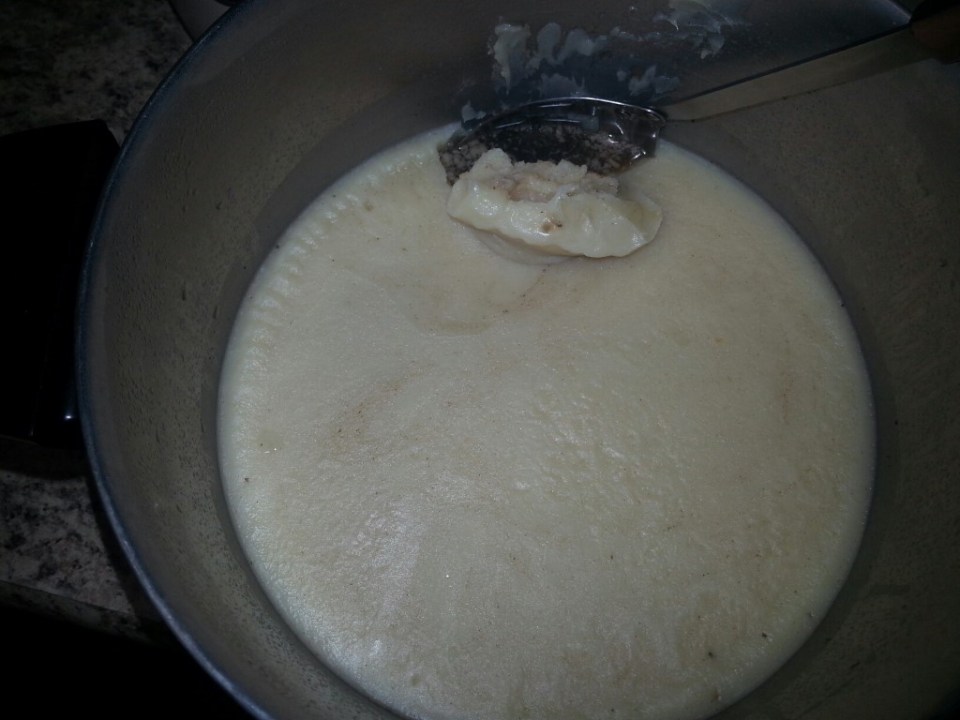
Once the fat has solidified, scoop it out with a slotted spoon and put it into a bowl.
20151113_214701_resized

scoopable-solid again

20151113_214751_resized

Look how dirty the water is

Once you get all the chunks of fat out (I use a small mesh strainer to get all the little bits), you’ll be left with dirty water which you can pour down the drain.

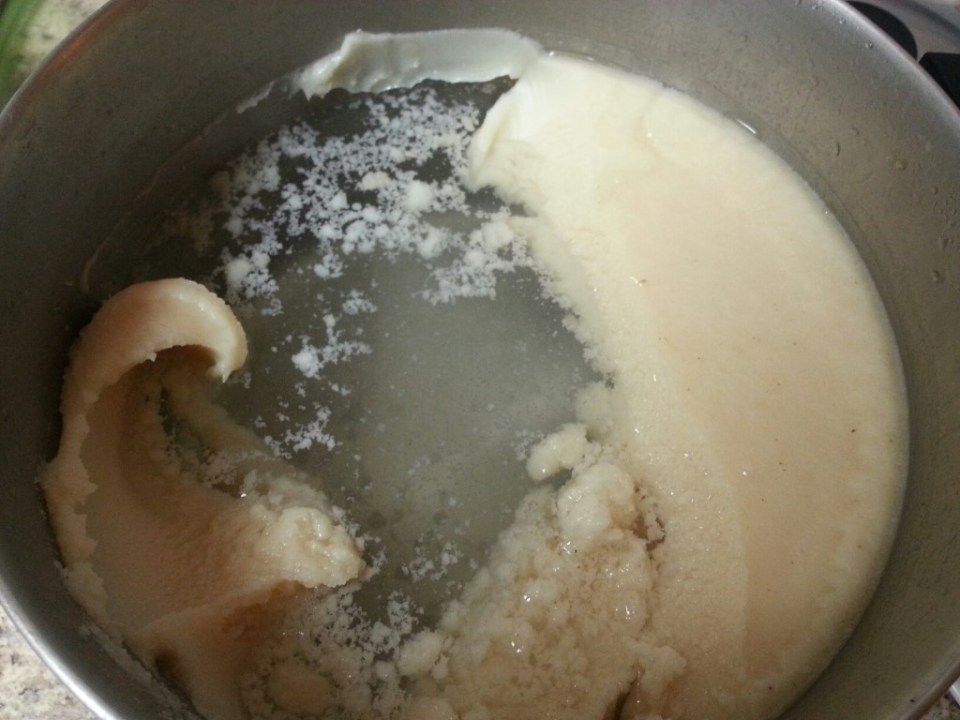
I usually “wash” the grease a couple more times by following the above steps, until the water is clear underneath the solidified fat.
20151114_181548_resized

Clear water

But you could certainly skip the subsequent washings if you wanted. I find that by filtering the grease through a paper towel first, it takes fewer “washings” to get the lard as clean as I like it.

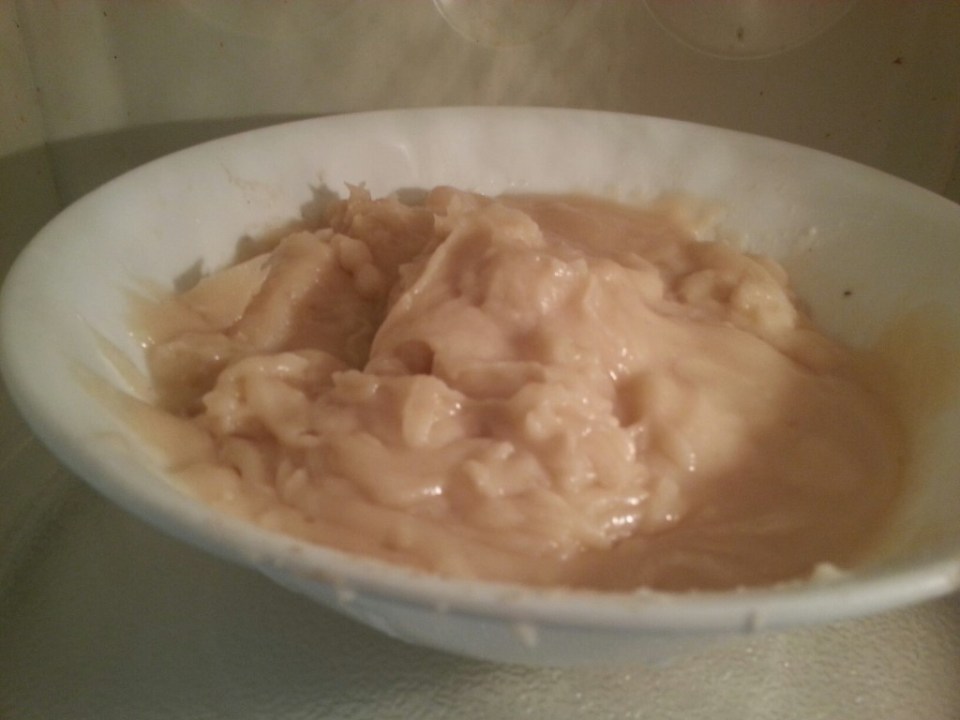
Once it’s as clean as you want it, you scoop the grease into a bowl with a slotted spoon or mesh strainer (try to let as much water drip from it as possible).
20151114_182121_resized

Clean lard

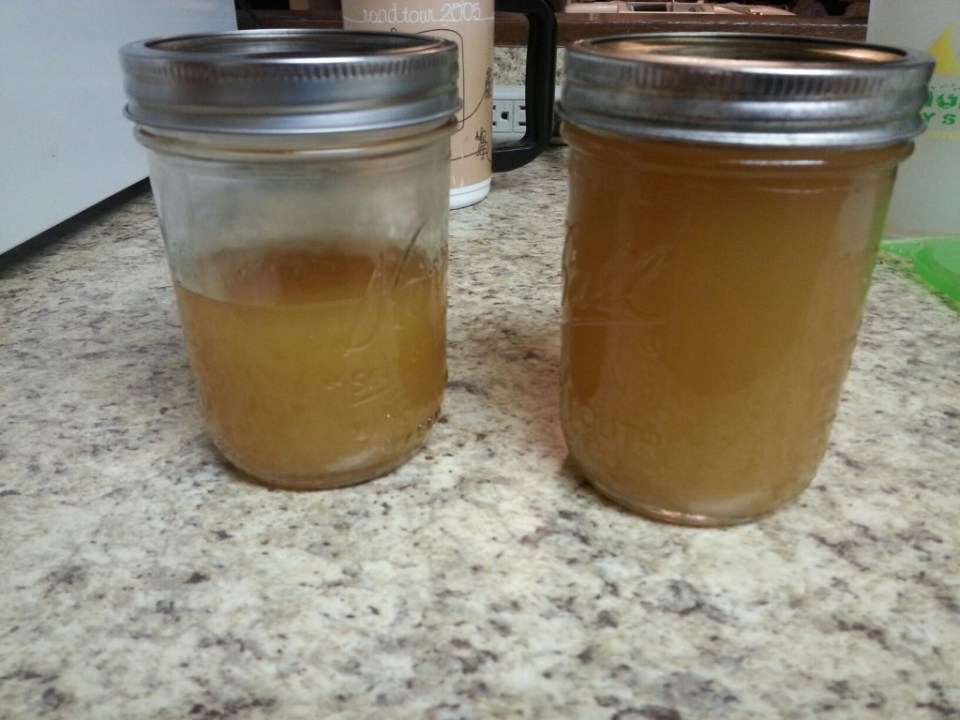
Melt the lard just until pourable and pour into mason jars*.
20151114_182937_resized

Notice the color change from the first time I microwaved it near the top of the post.

I suppose there’s probably some way to process this so that it is shelf stable. But I have never researched it. I just stick it in the fridge once it’s cooled off a bit (or freezer if I have extra).

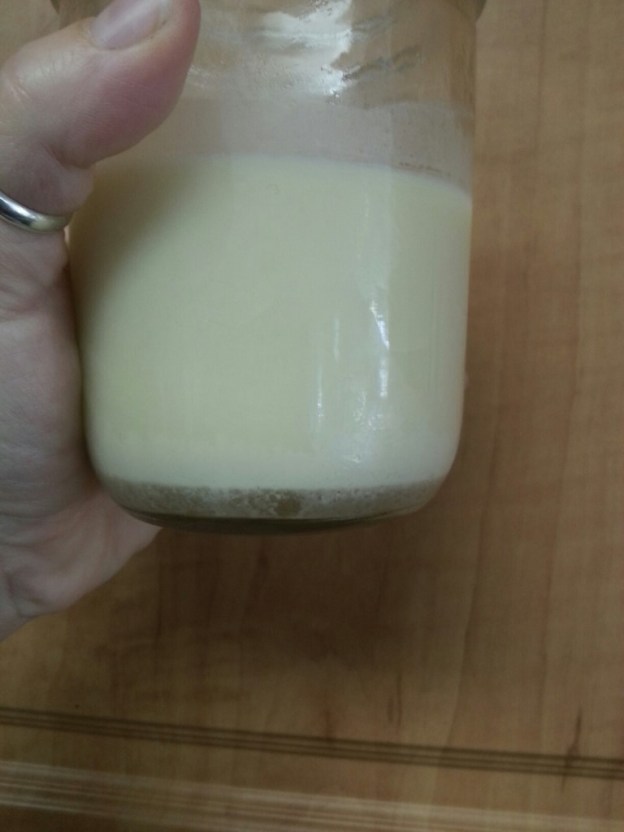
Note: once it has solidified, you might find that there is some water in the bottom of the jar.
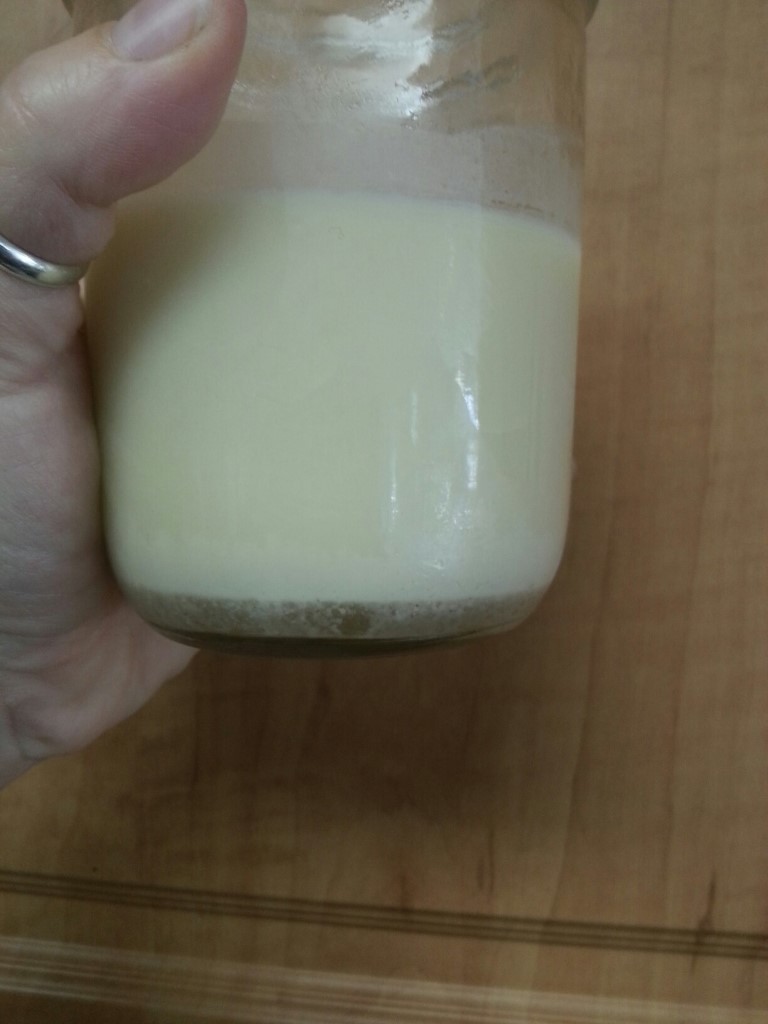
20151121_121609_resized

If this happens, slide a knife along the glass into the lard in two spots on opposite sides of each other. Then pour the water out one of the holes (the other hole is to allow air into the bottom cavity so the water flows easier.)
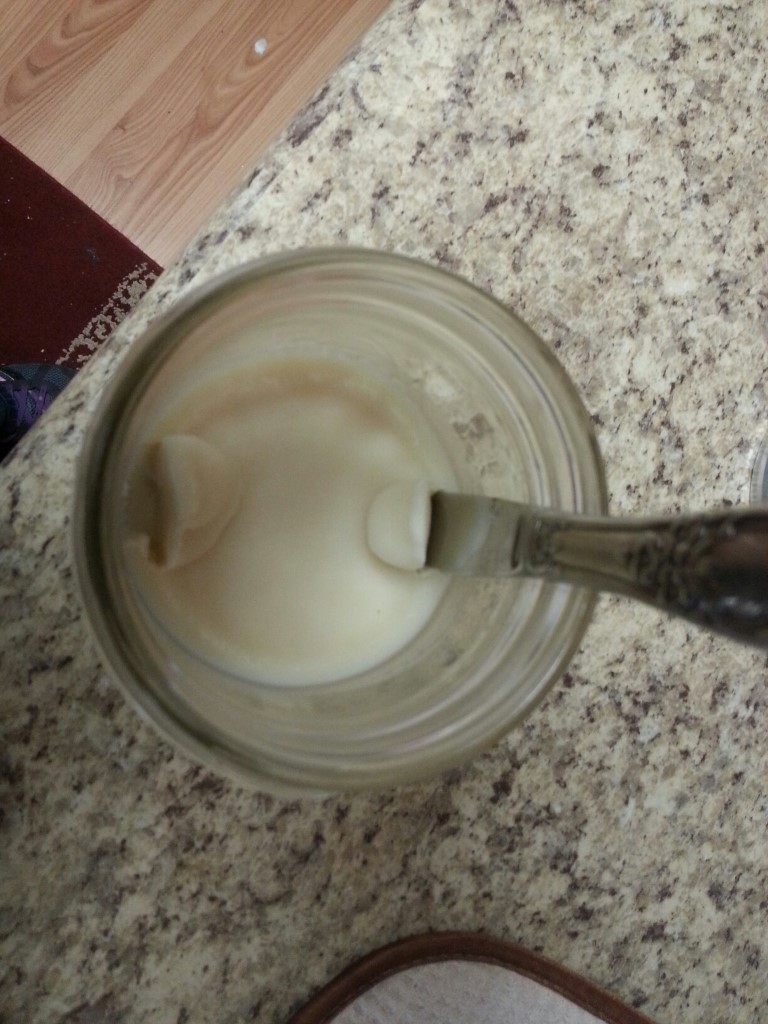
20151121_121643_resized

If you prefer, you can heat the grease again so it melts and fills the holes back in.

*I always use wide mouth pint jars because they are the perfect size for our favorite spatula to fit in to scoop out a bit of lard (not an affiliate link – we just really like the style. In fact, we happened to find some at the dollar store!).

So there you have it. Now that your bacon grease has become lard, you can use it in much the same way you do regular lard. I do find it still has a bit of a bacon flavor/odor, but it is only objectionable to use it in things that are naturally bland themselves. I have even made soap with it!

I always feel so frugal when I use my bacon lard. I mean, it is basically free since you’re gonna eat the bacon anyway, right? So now you have something useful to do with the left over grease.

Heritage recipes

image

Ok, so technically, only one of the recipes in this post can classify as “heritage” (ie being passed down from generation to generation basically unchanged), but I did get them both from my mom, so maybe that does count.

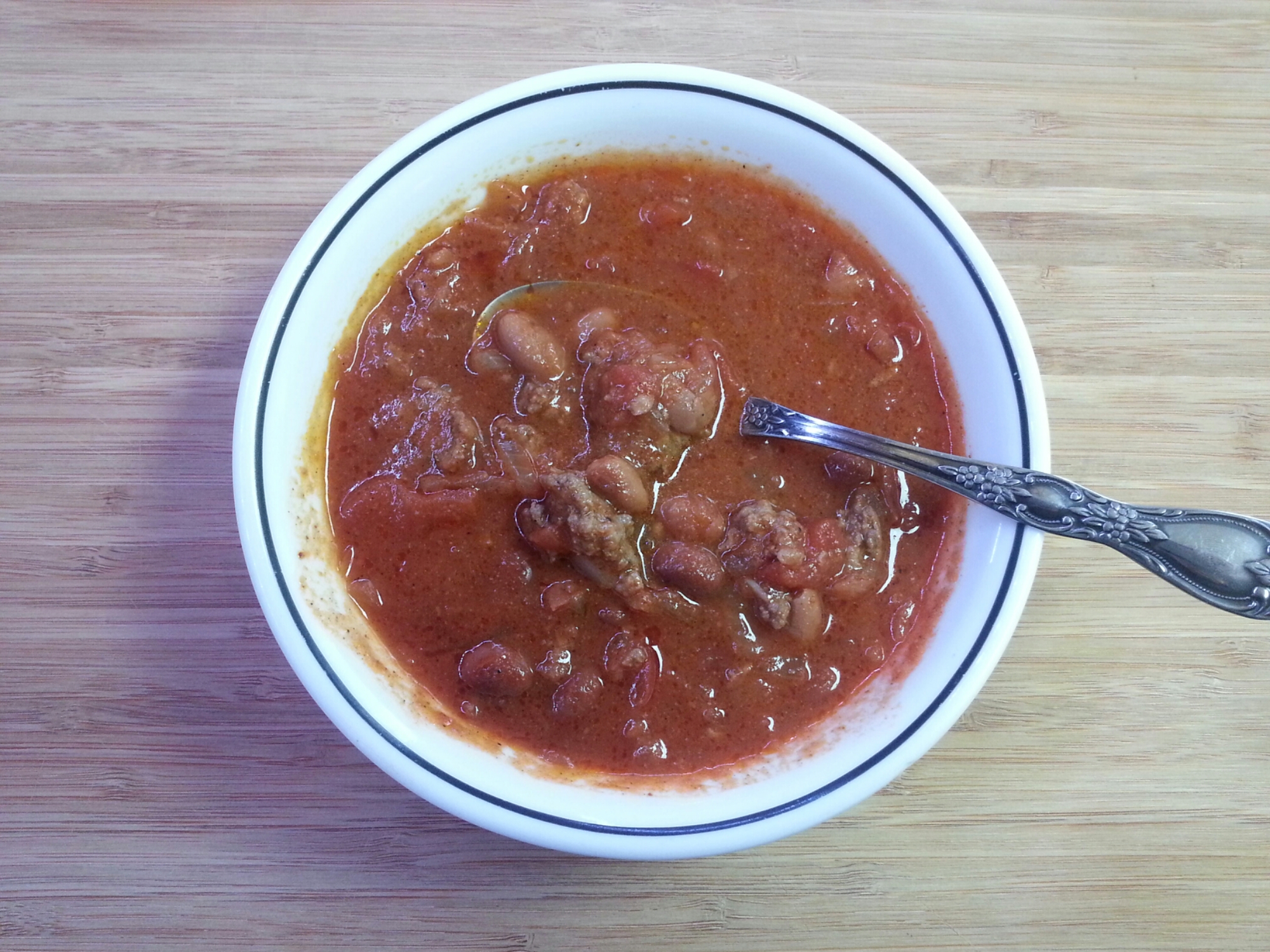
It’s been a rainy, dreary week here in the Pacific Northwest. Add to that the fact that the girls have been sick and now I am with a chest cold, and it’s been a week of soups for dinner. Chicken stew made by the hubby. Clam chowder requested by the Princess. Split pea because we had a ham bone which needed to be used. It’s been a cozy, comfort food kinda week.

And last night was no exception. As I was dozing on the couch that afternoon (such a luxury – one I ever only get when I’m sick!) I got a hankerin’ for my Mom’s chili.

Now, her chili is nothing special. It’s really easy to make. No special prep. It uses mostly canned ingredients, and it’s only the teeniest bit spicy. But for those of us who are whimps when it comes to spicy foods, it’s just about perfect. In fact, it’s the only chili one of my brothers willingly eats. I grew up eating this chili, paired with a tall glass of milk, and a large slice of cornbread made using my great, great grandmother’s recipe.

Oh, it’s heavenly!

So, without further ado, I give you my mom’s no frills, easy chili recipe, along with my great, great grandma’s cornbread recipe – because what good is chili without cornbread to eat with it?

Mom’s Easy Chili
Ingredients:
1-1.5lbs of ground beef
1large onion diced
Season salt to taste
2 cans stewed tomatoes
2 cans beans
3-4 Tbl chili powder
2 tsp garlic powder
1-2 tsp cumin
1.5 cups water (or more if simmering for a while)

Directions:
Place the meat in a soup pot with the diced onion and sprinkle with seasoned salt. Cook until meat is brown and onions are translucent. Drain off grease if desired. Drain and rinse the canned beans. Add all of the ingredients to the pot and mix well. Bring to a boil and simmer as long as desired, adding more water if too much evaporates.

Notes:
-My mom often used venison in place of the beef since we were a hunting family. You can use whatever meat you have on hand.
-I typically use diced tomatoes rather than stewed since I have a large stock of diced and never remember to buy stewed.
-Traditionally my mom used kidney beans, but I use pinto and/or red beans since canned kidney beans have added sugar. Of course you can use freshly prepared dry beans if desired.

While the chili is simmering, it’s time to put together this yummy cornbread. As I said before, this recipe comes down from my great, great grandmother, which means it is at least 100 years old. A true heritage recipe.

I think this cornbread is the perfect cornbread out there. Corn-mealy without being too crumbly or cakey. Moist but not gooey. And just enough sugar to make it sweet without being dessert.

Grandma’s Cornbread Recipe
Ingredients:
1 cup corn meal
1 cup flour
1/2 cup sugar (or honey)
1 tsp salt
1 tsp baking soda
1 cup sour milk (see notes)

Directions:
Preheat oven to 400 degrees. Mix together all the dry ingredients in a medium size bowl. Add the sour milk and mix thouroughly. Pour into an 8×8 casserole dish (or a cast iron pan if you want to be really traditional) and bake for 30 minutes.

Notes:
-My grandma (who got this recipe from her grandma) always used buttermilk for this recipe. I never have buttermilk on hand, so I make my own sour milk by adding 1 tablespoon lemon juice or vinegar to one cup of milk and allowing to sit for 5 minutes. Works perfect.
-Since I do not eat wheat, I have been experimenting with gluten free alternatives to the flour. Most recently, in place of the 1 cup flour I have been using 1/2 cup almond flour and 1/2 cup gluten free baking mix (made primarily with rice flour). I use the almond meal primarily to lower the carb count. If you use almond meal, lower the cooking temperature to 375 degrees.
-I have also replaced the processed sugar with honey to great results.
-Before I started tampering with the ingredients, sometimes I would add a can of creamed corn. This made it exceptionally moist, which we all loved. I do not know how it would turn out with the ingredient substitutions I now use. Maybe I’ll have to try one of these days. 🙂

Well, that’s it. I hope you enjoy! I certainly did.

In fact, I’m having left over chili for lunch today. Unfortunately, the cornbread was wolfed down so fast last night that not only is there none left for today, but I didn’t even get a picture.

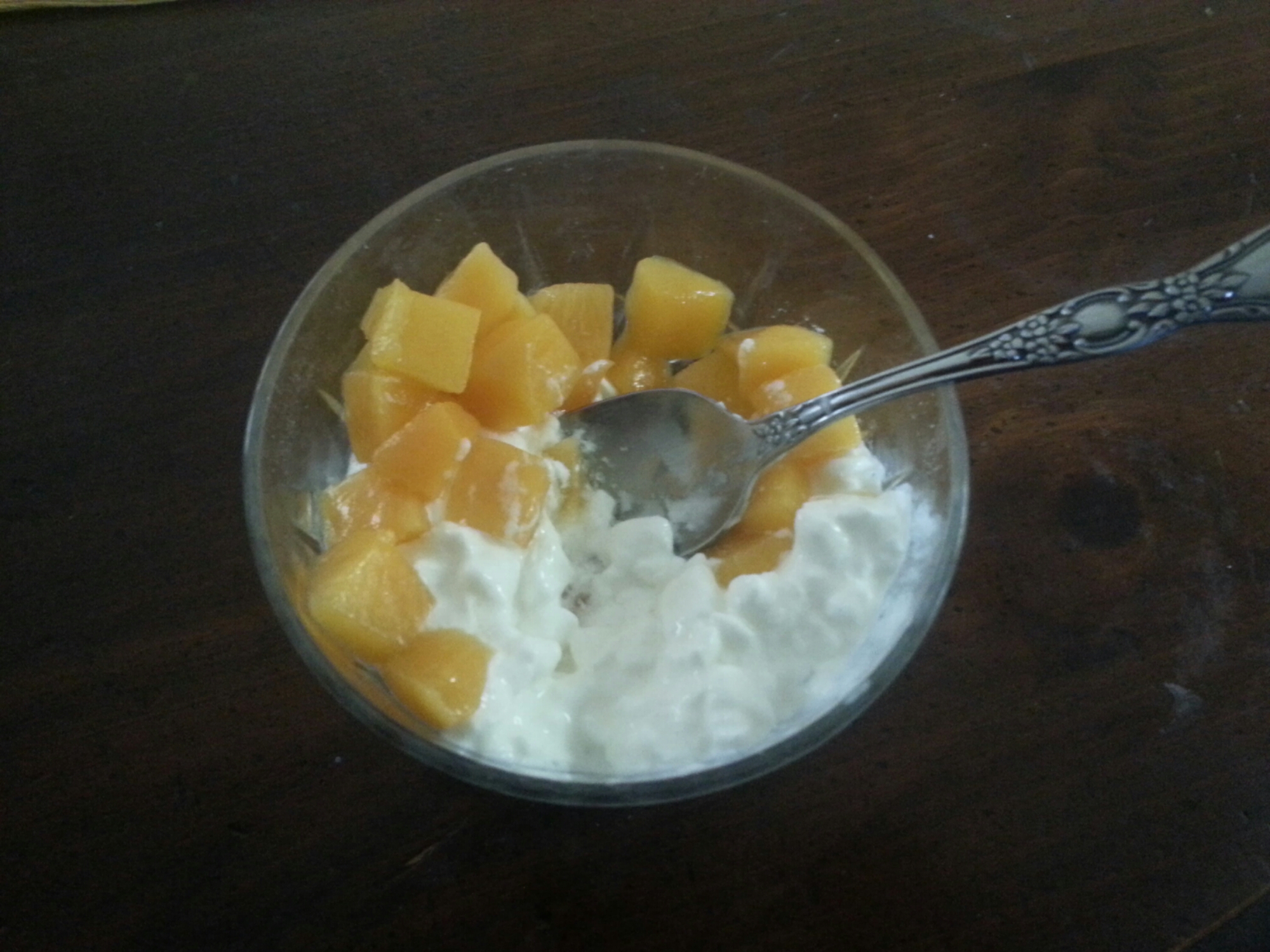
However, writing about my grandma put me in a nostalgic mood, so along with my chili, I’m having diced peaches with “smear case.”
image

Grandma never could tell me why her family called cottage cheese “smear case.” But in her later life, cottage cheese and diced fruit was one of her favorite foods. So, here’s to Grandma!

Maridy

“I lift up my eyes to the hills, where does my help come from? My help comes from the Lord, the maker of heaven and earth.” Psalm 121

Zucchini Oat Pancakes

Mmmmm….

The smell of pancakes cooking on the griddle.

I don’t know about you, but pancakes on a rainy Saturday morning seem just about the perfect thing.

image

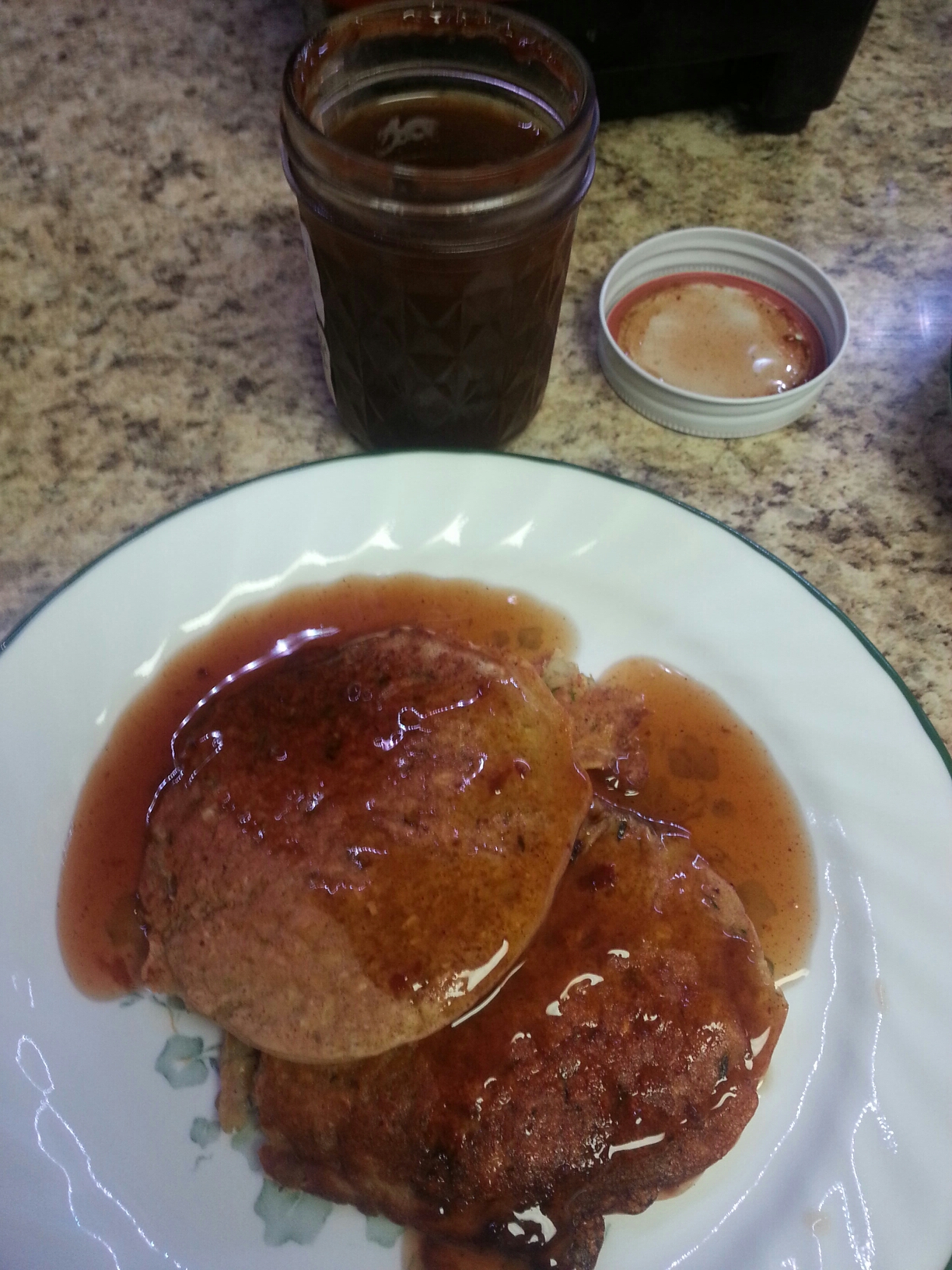
Oat Zucchini Pancakes with Apple Cider Syrup

It’s been years since I’ve had regular pancakes. I gave up eating wheat after learning that wheat is a major inflammatory food and it affects the arthritis in my knees.

So I went searching for a “gluten free” recipe. But I wanted one that uses normal and whole ingredients rather than processed, refined, high carb flours in place of the wheat.

I stumbled across this oat pancake recipe at www.mountainmamacooks.com. Orginally it called for a banana, but I am fresh out of bananas and I have quite a lot of frozen zucchini from this summer’s bounty. Besides, the Hubby likes zucchini better than banana anyway. (BTW, I think it’s so adorable that Flower Girl says banana like a Minion – BAN-nah-nah :-). The original recipe also called for almond milk, but we use regular milk.

The pancakes have a very moist and chunky texture, even with highly ground oats. I’ve never experimented with using quick/instant oats since old fashioned are all we ever buy. Maybe it wouldn’t be quite so chunky with instant oats?

As an aside, the girls helped make the pancakes this morning. Flower Girl helped add a few ingredients as is fitting for an almost-three-year-old. But Princess Girl helped with all of it. Not only did she help gather the ingredients, add them to the batter, do some of the mixing, and help with the cooking, she also did all the calculations to add a half batch to the recipe. She’s learning more complicated fraction operations in her school work, so this was perfect. She not only had to halve the recipe, she then had to add that half to the original. Natural learning for the win!

image

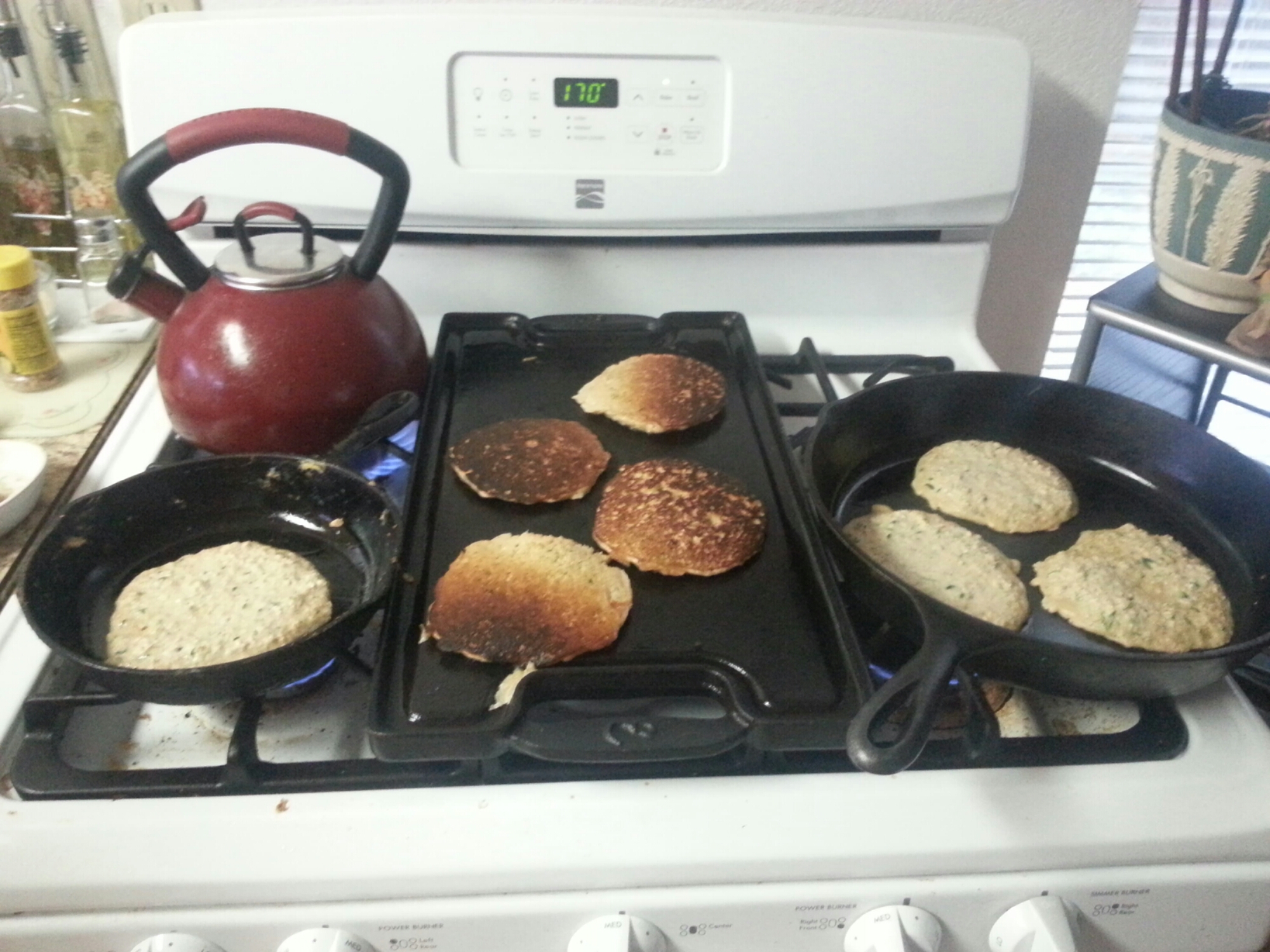
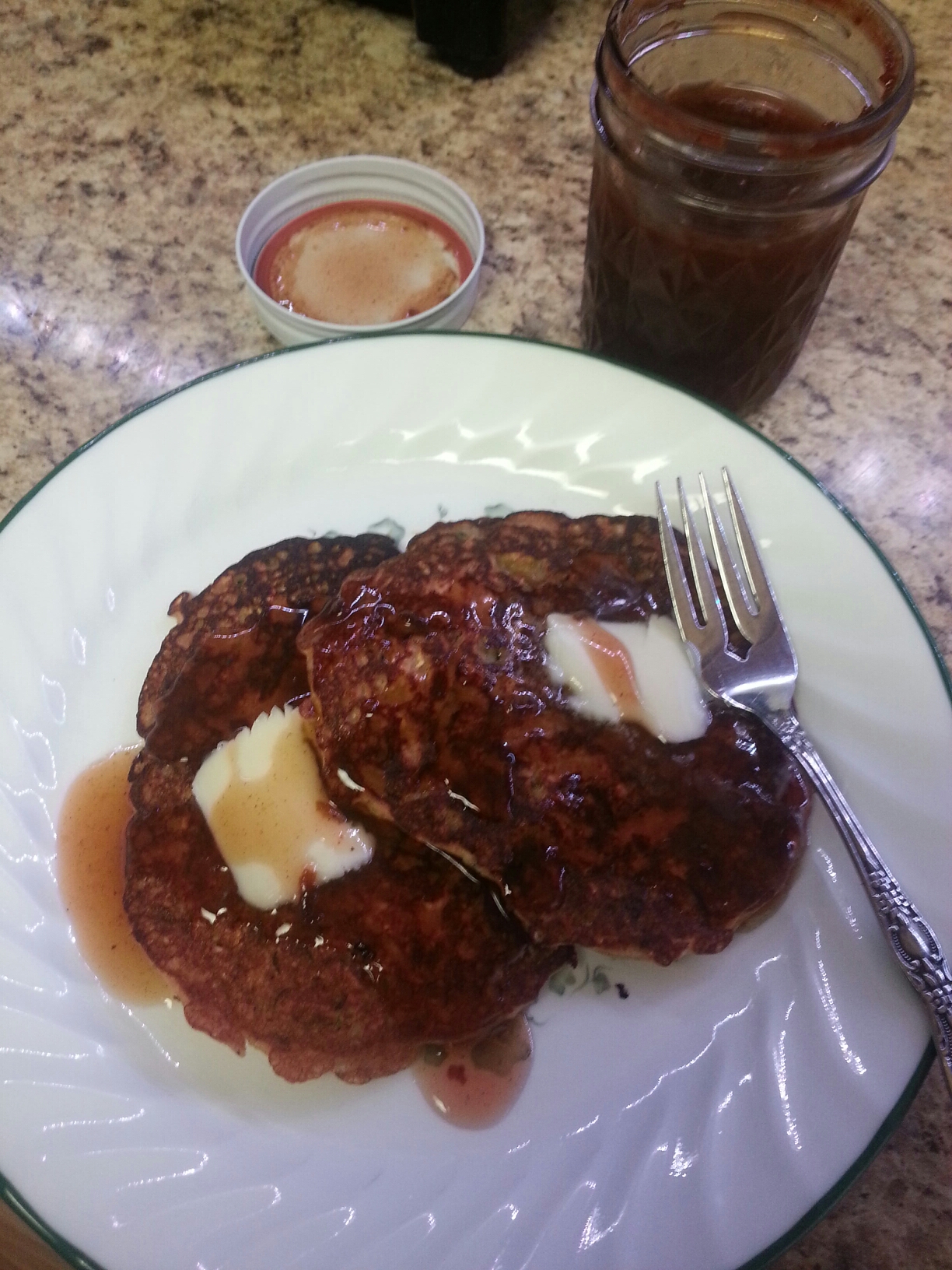
One thing about these pancakes, they can seem take forever to cook (thus the picture above). So I usually end up cooking them at a higher temp to speed up the process and they tend to get rather dark brown. Compare the two pics below.

image

image

If you’re looking for a gluten free pancake that is as close to traditional pancakes as possible, these aren’t them. But we all like the way these turn out. In fact, I personally like them even better. I always felt guilty eating regular pancakes. I felt that I was eating nothing but fluff and sugar – in essence, nothing more than cake. But these pancakes are filled with good quality, nourishing ingredients. And they taste phenomenal whether you use banana or zucchini!

Zucchini Oat Pancakes

2 cups oats
1 1/2 tsp baking powder (we use aluminum free)
1/2 tsp cinnamon
1/4 tsp salt
1 1/4 cups milk
2 cups shredded zucchini (or 1 large ripe banana)
1-2 Tbl honey
1tsp vanilla
1 egg

Directions:
Place oats in blender or food processor and pulse until it is chopped up fine like oat flour (I suppose you could also just use purchased oat flour as well). Add other dry ingredients and pulse to combine. Add remaining ingredients and mix well.

Ladle 1/4 cup(ish) of the batter onto a medium-low(ish) skillet or griddle. Spread the batter out so it’s not all clumped up, then cook until golden brown on each side, flipping as needed (time will depend on the heat of your cooking surface.)

I usually heat the oven to as low as it will go (170° on ours), place a plate in there, and put the pancakes in there as each one is done. This keeps them warm till they are all finished cooking and we can all eat together.

image

And that makes for a very good Saturday morning.

Maridy

“I lift up my eyes to the hills, where does my help come from? My help comes from the Lord, the maker of heaven and earth.” Psalm 121

Seamstresses in the making

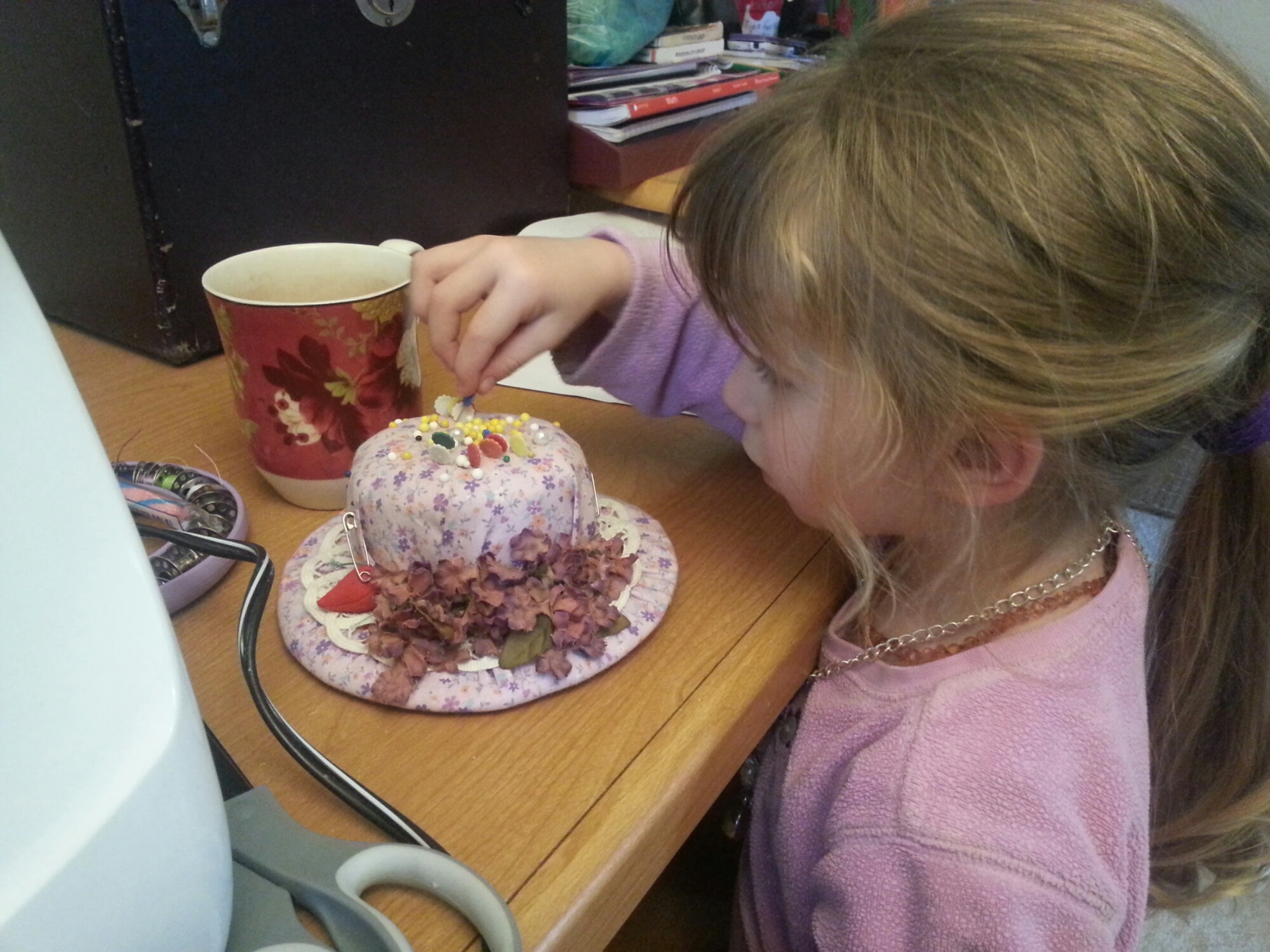
Why, yes. I do let my nearly-three-year-old play with my sewing pins.

image

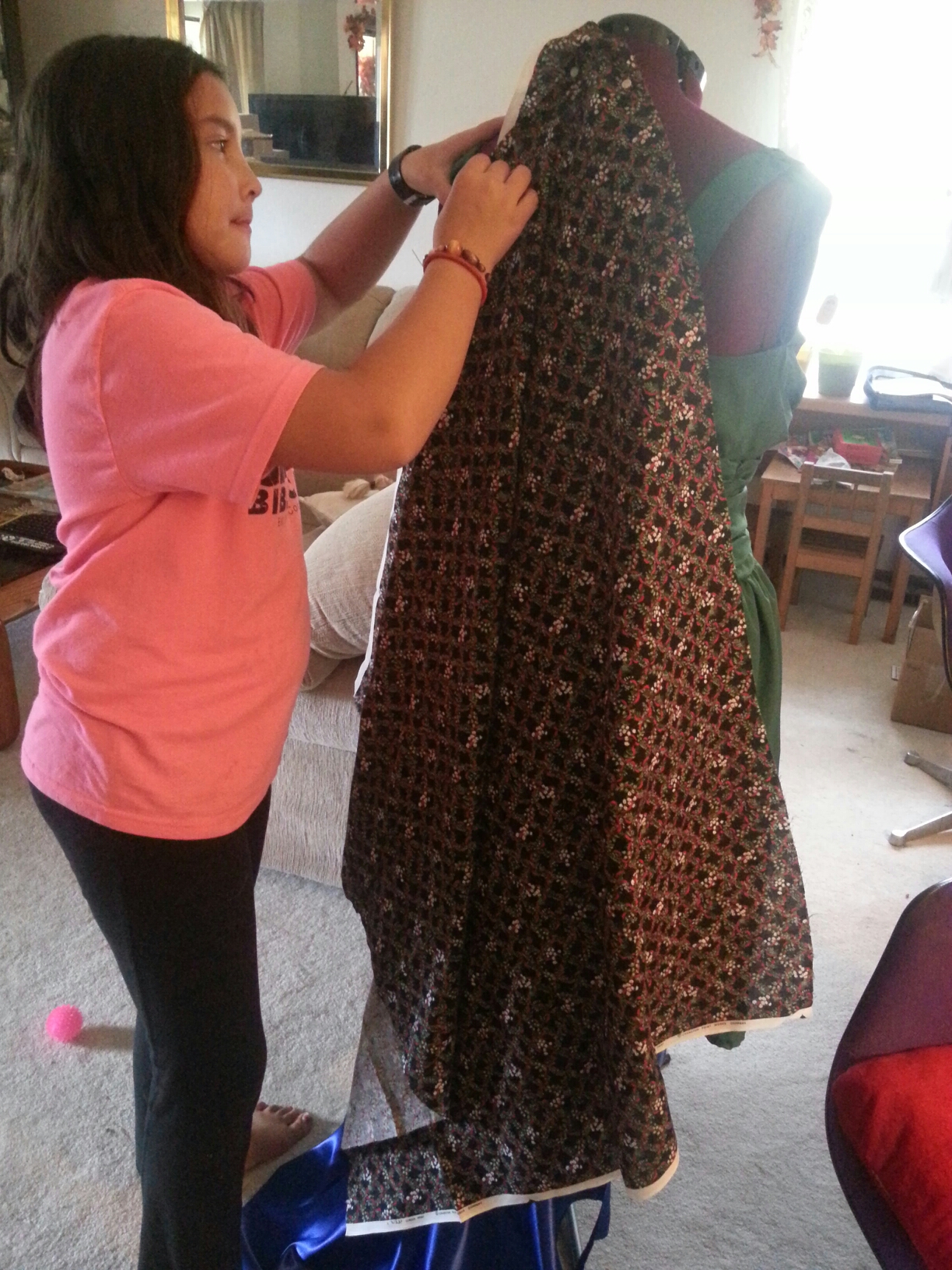
Just as I let her sister before her when she was young. And now Princess Girl loves designing.

image

Sewing is a big part of a sustainable lifestyle. When purchased thriftily, buying fabric can be much cheaper than buying ready-made items if you have the know-how. But sewing is so much more useful than making your own clothing from scratch.

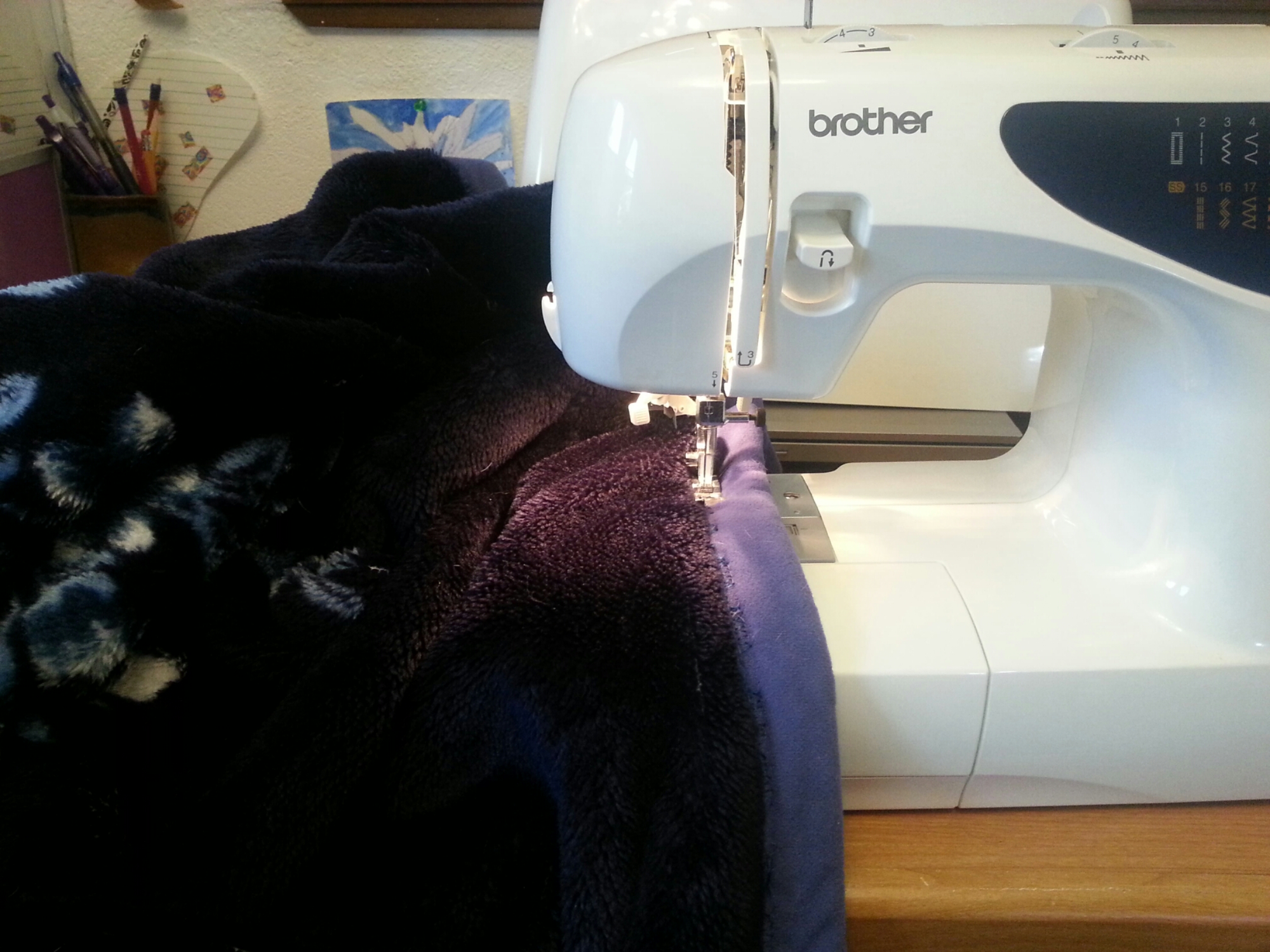
image

Mending a blanket.

Being able to repair those things which you already own is a first step toward living sustainably.

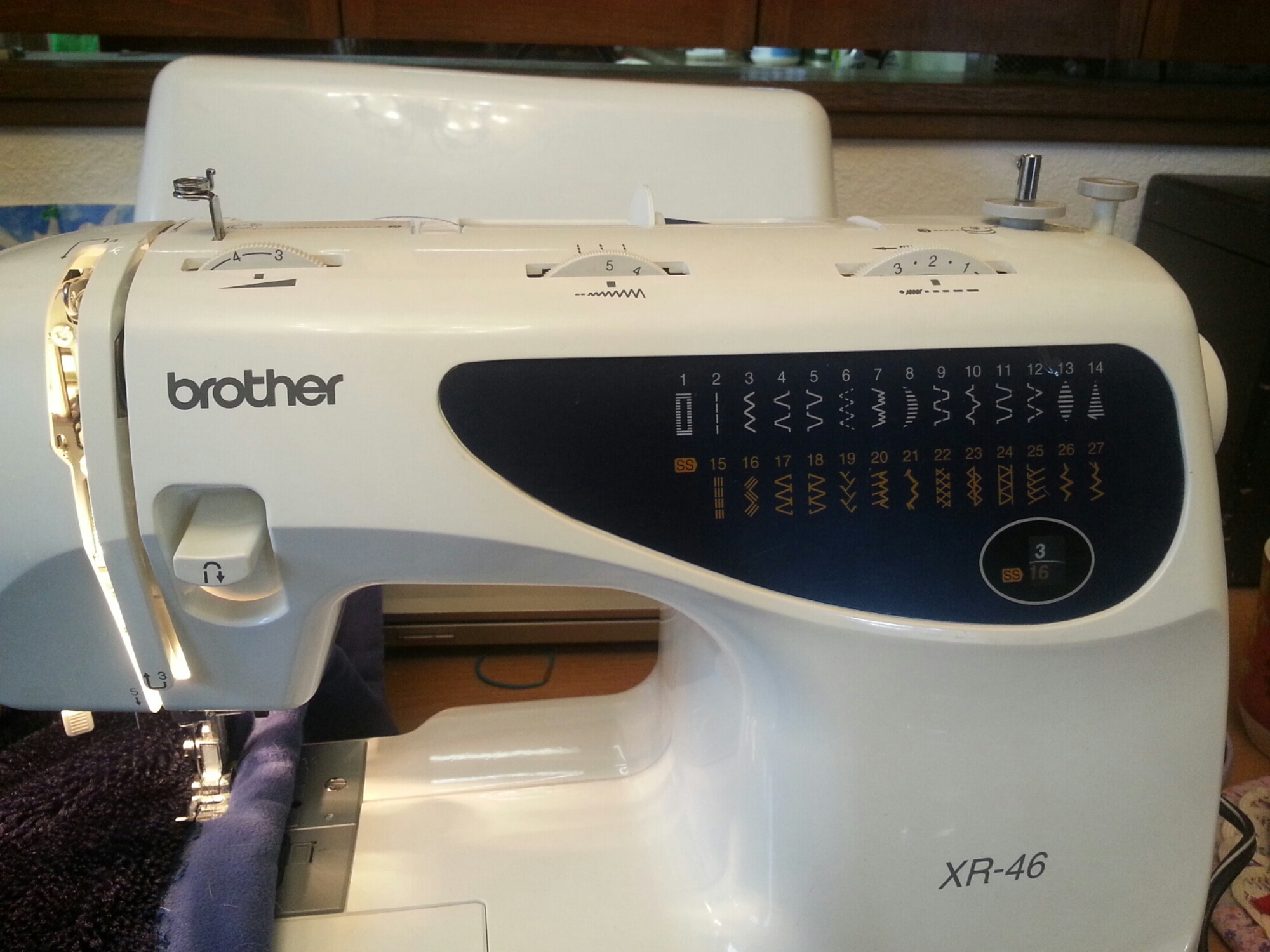
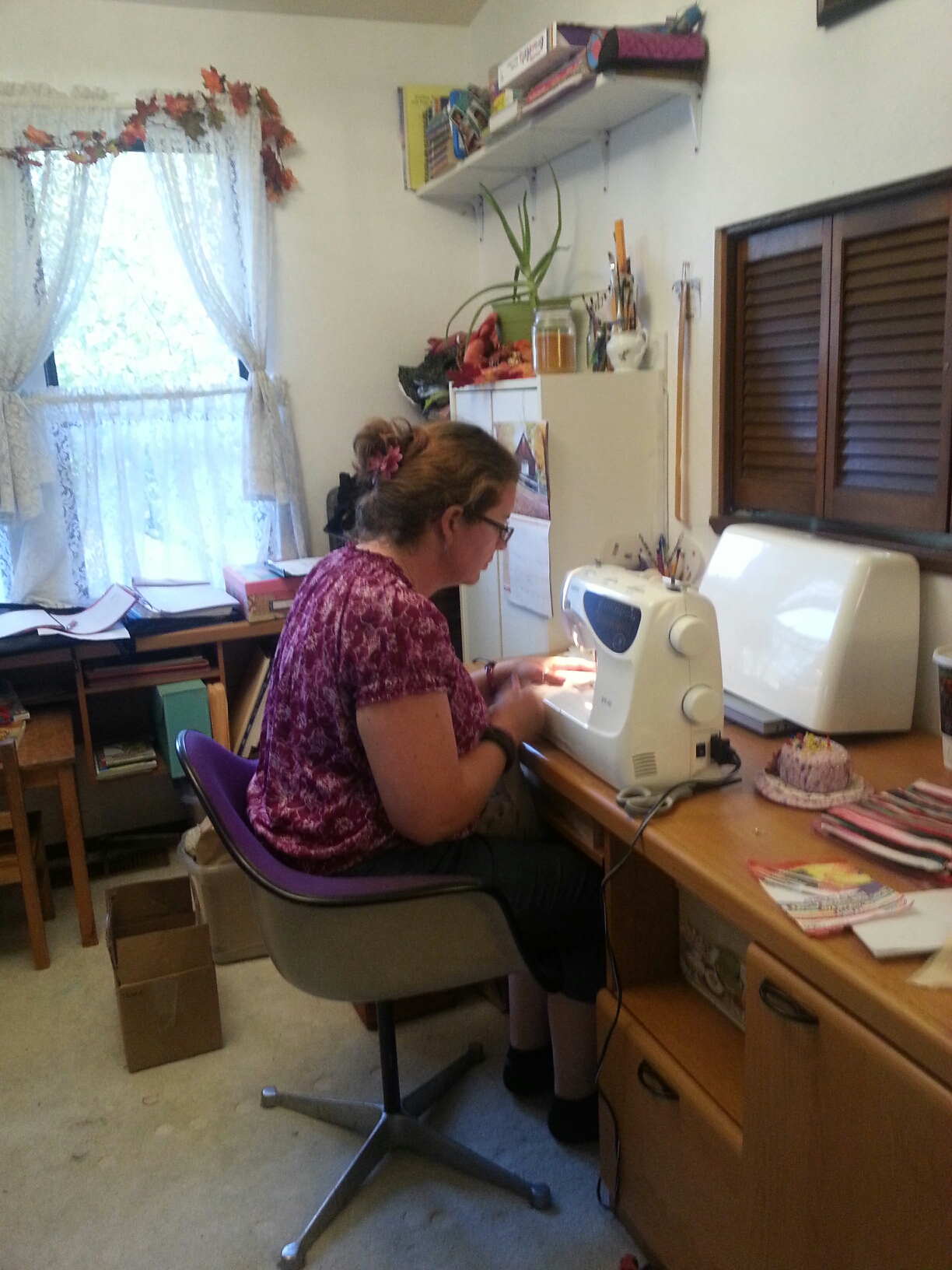
And you don’t need to tons of fancy gadgets and gizmos. A simple machine and a rudimentary knowledge of a few techniques will get you a long way. I myself have a rather simple machine.

image

I only ever use a couple of the available settings. But it serves me well.

If you have a machine but learning to use it is a daunting task, find a friend who can help you. (It’s hard to learn sewing from the internet unless you already know how to handle your particular machine since they are all a bit different.) As stated above, you don’t need to know how to use every setting on your machine. You basically just need to know how to thread it, how to load and refill the bobbin, how to do the straight stitch and zig zag stitch, and what the length, width, and tension dials do. You can do an awful lot of sewing with those basic skills. And as you practice more and become more comfortable, you can start learning all the other things your particular machine can do.

image

If you don’t have a sewing machine and can’t afford even a basic one, at least learn how to hand sew. Knowing a few easy stitches can be the difference between repairing that blanket and buying a new one, or paying someone to hem your pants or doing it yourself. And hand sewing is easy to learn from videos on the internet.

And remember, if children can learn to do it, you can, too!

Let’s hear you chime in. Do you think that sewing is an important skill to know? Do you know how? Wanting to learn?

Maridy

“I lift up my eyes to the hills, where does my help come from? My help comes from the Lord, the maker of heaven and earth.” Psalm 121

Christmas sewing

Alright, alright! I’ll admit it.

I’m a fabric junky.

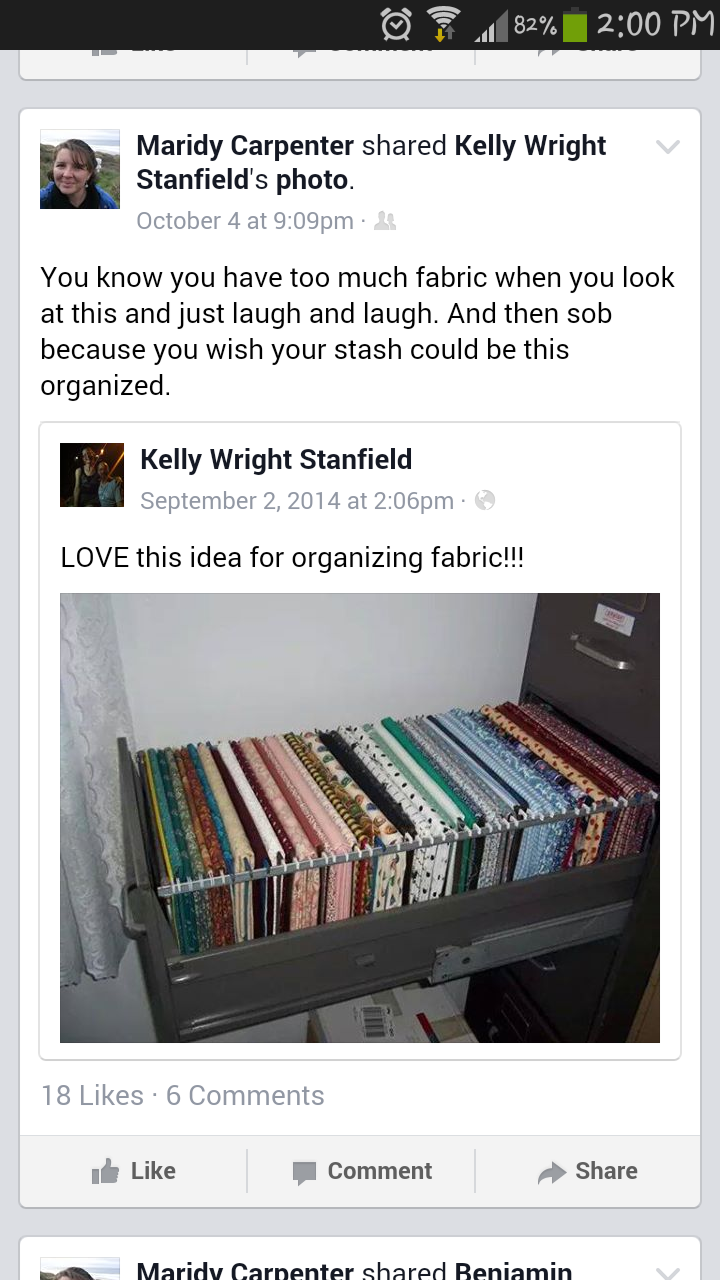
There’s a picture floating around Facebook of fabric being stored oh-so-neatly in a filing cabinet drawer.

Here’s what I said about it.

image

Yes, I actually chuckled when I saw that picture. There’s no way my stash of fabric could ever be that neatly organized. I have too much. It would take 5 whole filing cabinets! The yardages I have are too big. Some of my fabric pieces would nearly fill their own drawer by themselves. Or they are too small.

And yet, I WISH my stash could look like that.

Oh wait. That’s right.

I don’t HAVE a stash!

At least, not here in Oregon.

And not really in Nevada either.

When we moved into our trailer on the homestead last year, I downsized drastically. My “stash” consists of three boxes (albeit two big ones and a medium one). And you know where those three are?

That’s right. They are in Nevada. Awaiting the day when our house is built and I have a sewing area again.

In the mean time, I have a million ideas running around my head of things I want to sew, especially Christmas gifts.

So, I went shopping. I went with one project in mind.

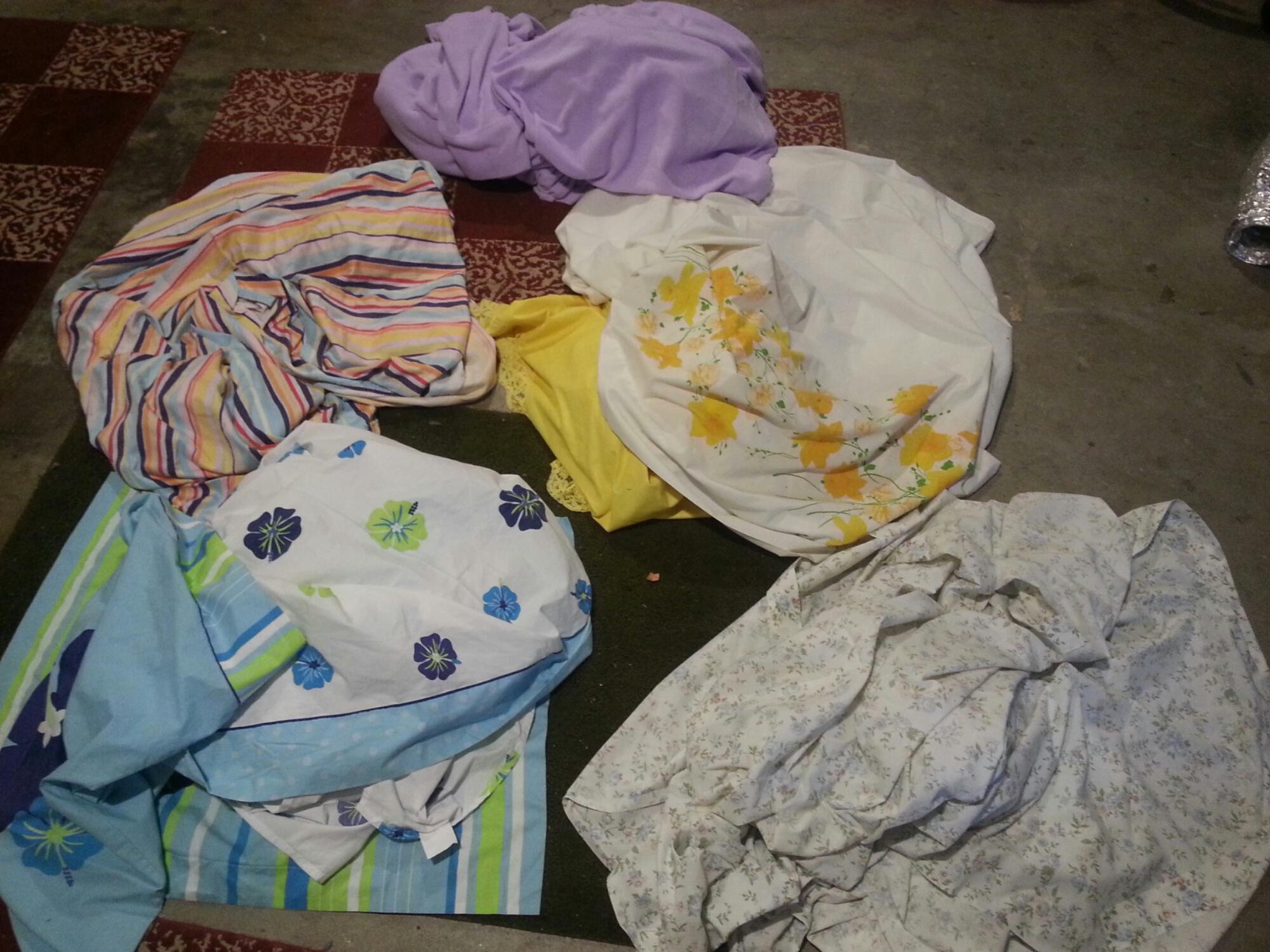
Here’s what I ended up with:

image

I couldn’t help myself. All this fabric was only $15!

Yep, though they are all sheets, it turned out to be about $1 per yard. Pretty good deal, I’d say.

How, you ask?

Thrift store.

And not the overpriced big name ones either. A small, locally owned store in our neighborhood. The type of store where the proprietor is willing to give you a deal on things because she knows that money earned is better than items sitting on the shelf.

So what am I going to make with all that fabric? Well, I can’t tell you. Most of it is for Christmas gifts, afterall. And I know the intended recipients read this blog.

image

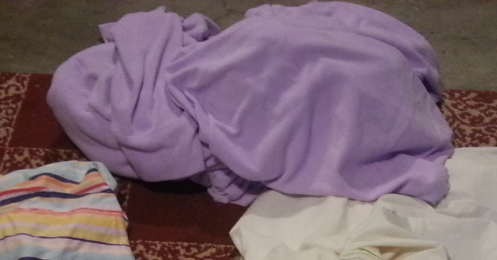
However, I can say that the purple fleece will become three matching pairs of pajama pants for the girls and I, to be given on Christmas eve. I’ve been wanting matching jammies for us for a long time and almost bought a set online the other day. But couldn’t quite shell out the $32 + shipping it would have cost. And buying fabric from a traditional fabric store wouldn’t cost much less.

So, $5 and a little work, and I’ve got them.

Thrifting for the win!

What about you? How do you save money when it comes to Christmas gifts? Do you make your own?

Maridy

“I lift up my eyes to the hills, where does my help come from? My help comes from the Lord, the maker of heaven and earth.” Psalm 121